
You've decided your company needs a new website. Maybe the current one looks dated, maybe it's not generating leads, or maybe you've outgrown what you built five years ago. Whatever the reason, you're about to hire a web design agency, and if you've been through this before, you know how badly it can go.
The web design industry has a trust problem. Projects run late, budgets balloon, and the senior person who sold you on the engagement disappears after the contract is signed. Most companies, from small businesses to mid-market firms, have at least one agency horror story. The frustrating part is that the agencies that underdeliver often look identical to the good ones, at least from the outside.
This guide walks through how to evaluate web design agencies before you sign anything. What to look for in their portfolio, what questions to ask, which red flags actually matter, and how to compare proposals without getting lost in jargon. By the end, you'll have a clear framework for making this decision with confidence instead of crossed fingers.
Know What You Need Before You Start Looking
The biggest mistakes in hiring a web design agency happen before companies even start searching. They jump straight to Googling "best web design companies" without first getting clear on what they actually need.
Define the Problem, Not Just the Deliverable
"We need a new website" is not a brief. It's a starting point. Before you contact a single agency, get specific about what's actually wrong with your current site and what you need the new one to do differently.
There's a meaningful difference between "our website doesn't reflect the quality of our company" and "our website doesn't generate enough leads." The first is a brand identity and design problem. The second is a conversion rate and user experience problem. Both might need a new site, but the agency best suited to solve them could be very different.
If your core challenge is reaching the right target audience or strengthening your online presence, that shapes who you hire. If you need e-commerce functionality, that's a fundamentally different build than an informational B2B site. The clearer you are about the problem, the easier it is to evaluate whether a given website design agency can actually solve it.
Set a Realistic Budget Range
Website pricing varies wildly, and walking into agency conversations without a budget range wastes everyone's time. Here's a rough breakdown of what different investment levels typically get you:
- $5K–$15K. Freelancer or small shop territory. At this level, you're usually getting a template customization with your branding applied, not a custom website design. That's fine for some businesses, but know what you're buying.
- $15K–$50K. Specialist agency range. This is where you start getting real strategy, custom design, professional copywriting, and a team that thinks about how the site supports your business goals.
- $50K–$150K+. Large agency territory. Complex sites with custom functionality, multi-market support, deep integrations, or enterprise-scale content.
Having a number in mind doesn't mean you share it with every agency on the first call. But it helps you filter quickly. If an agency's minimum project is $40K and your budget is $15K, that's not a personality conflict. It's just a mismatch.
For more on this topic:
Agency, Freelancer, or In-House?
Before diving into how to choose an agency specifically, it's worth asking whether an agency is even the right path. You have three options, and each fits different situations.
A freelancer makes sense for smaller projects with clear scope, especially if you already have strong in-house content and marketing teams. You get direct access to the person doing the work, lower cost, and flexibility. The trade-off is limited capacity and a single point of failure.
An in-house hire makes sense when you have enough ongoing web work to justify a full-time salary. If your site needs constant updates, new landing pages every month, and regular optimization, a dedicated person might be more cost-effective than recurring agency fees.
An agency makes sense for larger projects where you need a team of specialists (design, web development, content, UX design) without hiring them all individually. You're paying for a coordinated team with a repeatable process and experience across many projects. The rest of this article focuses on how to choose the right one.
What to Look for in a Web Design Agency's Portfolio
The portfolio is the first and most important filter. But most buyers evaluate portfolios wrong. They judge visual style instead of strategic thinking, and they miss the details that actually predict project quality.
Look Past the Pretty Pictures
A beautiful website that doesn't convert visitors into leads is a failure, no matter how many design awards it wins. When you're reviewing an agency's portfolio, resist the urge to evaluate based on first impressions of visual design alone. Instead, ask these questions about each piece:
- Is the messaging clear? Can you tell what the company does within five seconds of landing on the homepage?
- Is the user experience intuitive? Does the navigation make sense? Can you find what you'd be looking for if you were a potential customer?
- Is there a clear conversion path? Are there calls to action that guide visitors toward a next step, or does the site just look nice without asking anyone to do anything?
- Does it work on mobile? Pull up the portfolio sites on your phone. Responsive web design with a mobile-first approach is table stakes in 2026, but you'd be surprised how many agency portfolio pieces break on mobile devices.
These are the things that separate a portfolio of "designs" from a portfolio of "websites that work." If an agency's portfolio is full of gorgeous sites where you can't figure out what a single client actually does, that tells you where their priorities are, and they're not aligned with yours.
A strong agency's portfolio page tells you more than just what the work looks like. It shows you the range of industries they've worked in, the types of problems they've solved, and whether they organize their work around results or just aesthetics. Look for a portfolio that groups projects with context: client names, industry labels, and brief descriptions of what the project involved.

Notice how each project card gives you enough context to understand the industry and scope before you even click through. A portfolio organized this way signals that the agency thinks about their work strategically, not just visually. If an agency's work page is nothing but a gallery of homepage screenshots with no labels or descriptions, you're evaluating decoration, not capability.
Industry Relevance Matters (But Not as Much as You Think)
Should the agency have direct experience in your exact industry? The answer is more nuanced than most people expect.
What matters is B2B experience. An agency that understands long sales cycles, multiple decision-makers, and complex products will translate that understanding across industries. An agency that's built strong sites for manufacturing companies, professional services firms, and engineering businesses can probably handle your technology company or your logistics operation.
What doesn't matter as much is exact vertical match. You don't need an agency that's built twelve law firm websites to build a good law firm website. You need an agency that knows how to present a complex service offering clearly, build trust with skeptical buyers, and create a site that supports a longer sales process. Those skills transfer across industries.
Where industry experience does matter is in regulated industries (healthcare, finance) or highly technical fields where the agency needs to understand compliance requirements or technical language to do the work effectively.
Case Studies and Testimonials Over Screenshots
The best indicator of a web design company's capabilities isn't how their portfolio looks. It's what their work achieved. Real case studies describe the problem the client was facing, the approach the agency took, any constraints they worked within, and the results that followed. If an agency can show that a redesign increased qualified leads by 40% or reduced bounce rates by half, that's evidence of strategic thinking, not just design skill.
Client testimonials add another layer, especially ones with real names and titles. "Great to work with!" from an anonymous reviewer means nothing. A specific quote from a VP of Marketing describing how the agency handled a difficult content challenge means a lot.
When browsing an agency's portfolio, look for case study cards that lead with outcomes, not just visuals. The best agencies surface measurable results right on their work page, so you can see the impact before you even click into the full story.
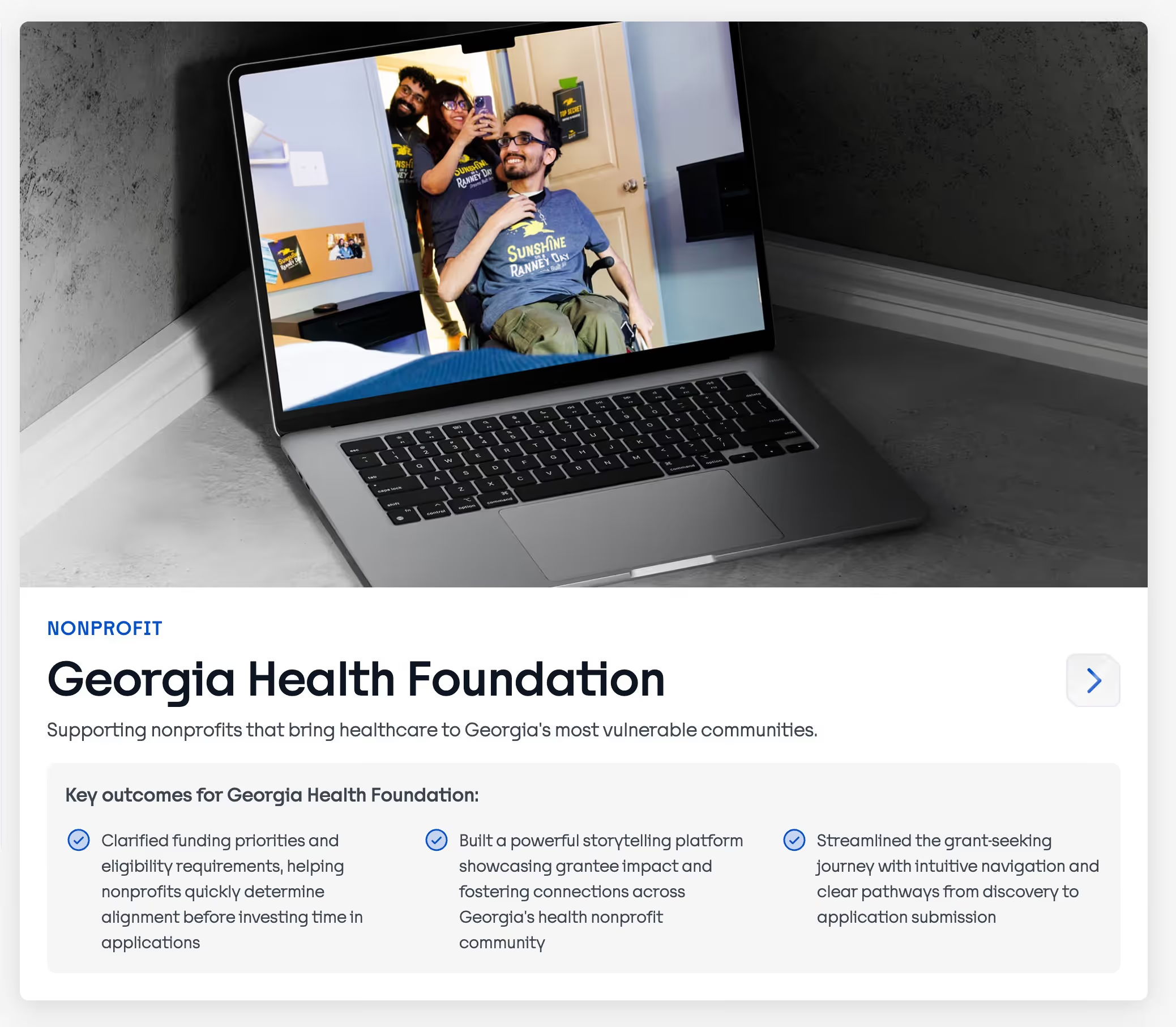
The results listed on a card like this give you an immediate sense of whether the agency thinks about business impact or just visual polish. Look for specifics: did they improve a process, clarify a message, or create something measurable? Those details are what separate a real case study from a dressed-up screenshot.
Directories like Clutch can be useful here. They collect verified reviews from real projects, including budget ranges and project timelines. It's not a perfect system, but it's better than taking the agency's word for it. Look for reviews that mention communication, adherence to timelines, and the agency's ability to handle unexpected challenges. The track record that matters most isn't the number of successful projects completed. It's how those projects were managed.
For more on this topic:
Questions to Ask Before You Sign
The sales process reveals a lot about how an agency actually operates. The right questions, asked before you sign a contract, can save you months of frustration. Here are the ones that matter most.
Who Will Actually Do the Work?
This is the single most important question you can ask, and the one most buyers forget. The number one complaint about web design agencies is the bait-and-switch: you're sold by a senior partner or a polished sales team, and then the project gets handed to junior staff you've never met.
Ask directly: Who will manage this project day to day? Who will do the design? Who will handle development? Can I meet them before we sign? A good agency won't hesitate to introduce you to the people who'll actually be building your site. If the agency dodges this question or says "we'll assign a team after kickoff," that's a warning sign worth paying attention to.
One of the most telling pages on any agency's website is their team page. Look at how they present the people behind the work. Are there real photos and specific role descriptions, or just a wall of stock headshots with generic titles? An agency that's proud of its team will show you exactly who does what.
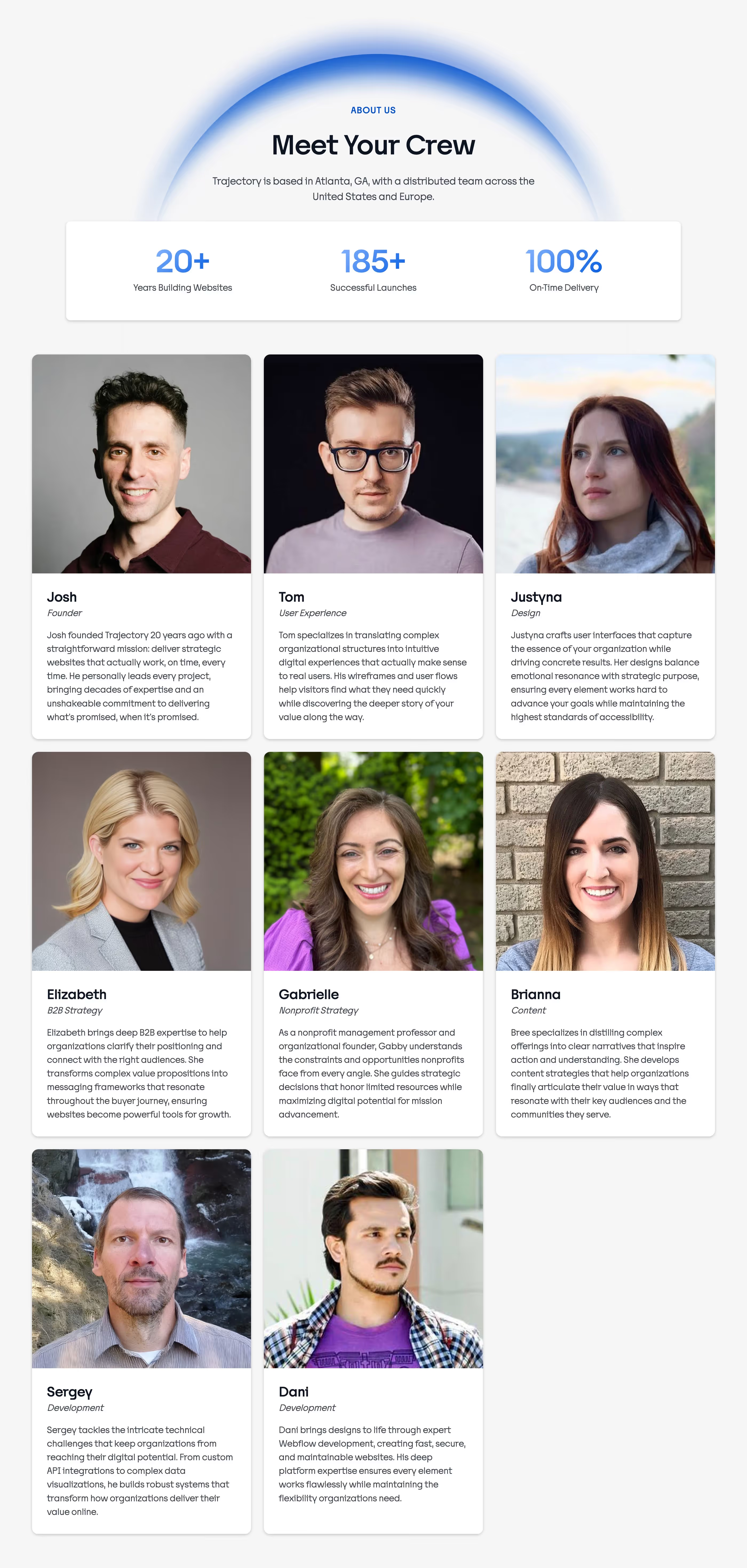
A team page like this tells you several things at once. You can see how many people are on the team, what their specialties are, and whether the people doing the work are senior or junior. A small team with visible, experienced members is often a stronger signal than a large team with vague role titles. If the agency can show you exactly who will be on your project and what they bring to it, that's a level of transparency worth rewarding with your business.
What Does Your Design Process Look Like?
A good web design agency should be able to describe a clear, repeatable design process without fumbling through it. Ask them to walk you through a typical project from kickoff to launch. You're listening for structure, not a rigid 47-step proprietary methodology.
A solid development process typically includes discovery (learning your business, audience, and goals), strategy and content planning, design, development, quality assurance, and launch. The specifics vary, but the presence of a clear sequence matters. If the answer is "we figure it out as we go," your project will suffer the consequences of that lack of structure.
Pay attention to whether UX design is built into their process or treated as an afterthought. The best agencies don't just make pages look good. They structure them based on how users actually behave, test assumptions, and iterate. Project management should also be clear. Ask who keeps things on track, how they communicate progress, and what happens when timelines shift.
A documented process page on an agency's website is itself a positive signal. If they've taken the time to name their phases, describe what happens in each one, and present it clearly, that tells you they've refined their approach across enough projects to codify it.
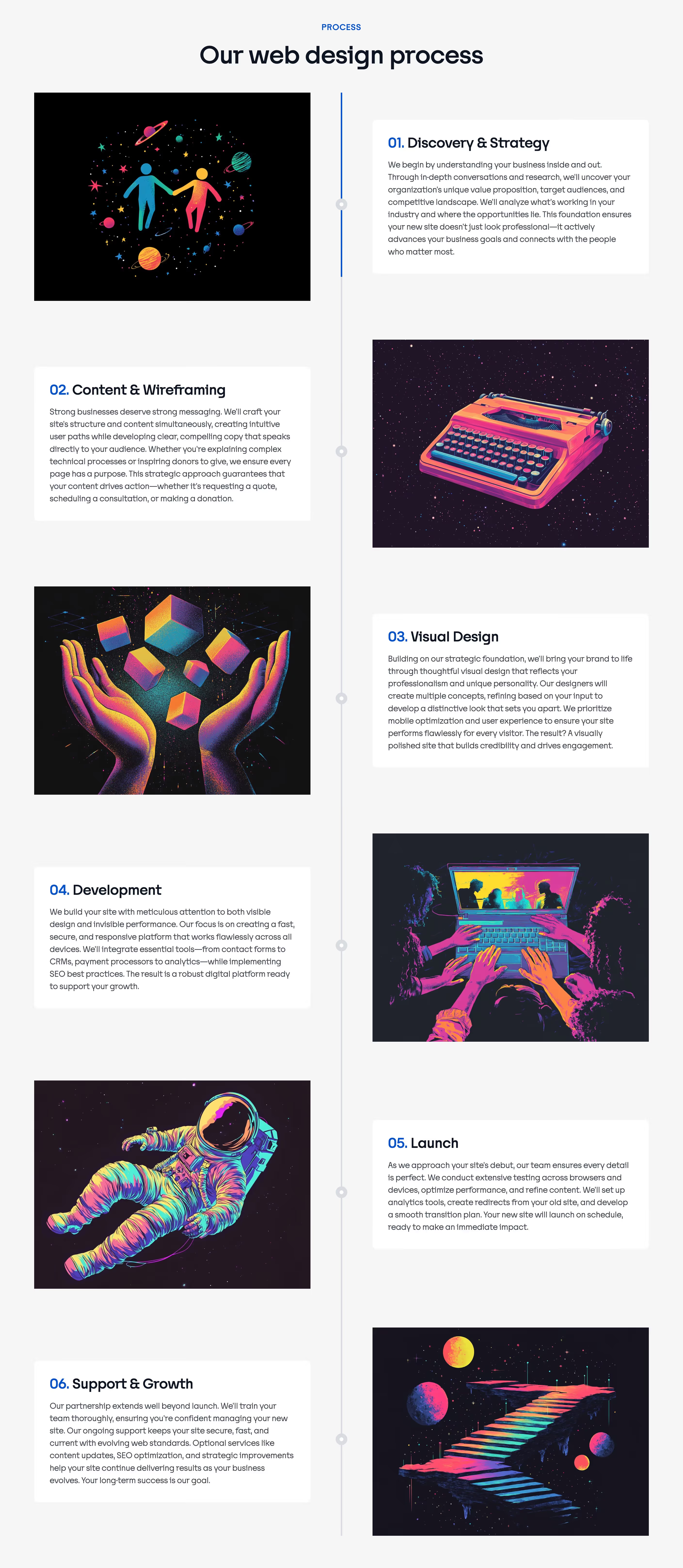
The key things to look for: named phases with specific descriptions of what happens in each, a logical sequence from research through launch, and some indication of what comes after the site goes live. The two extremes to watch out for are no process at all (which means your project becomes the experiment) and an overly rigid process that doesn't adapt to your needs (which means the agency is more interested in their system than your outcome).
How Do You Handle Content and Messaging?
This is the question most buyers forget to ask, and it's the one that most often determines whether the final product actually works. A visually stunning site with unclear, confusing messaging is a very expensive failure.
Many agencies expect the client to provide all content. That sounds reasonable until you realize it means the new site launches with the same messaging that wasn't working on the old one. Nothing changes except the visual wrapper. Ask specifically whether the agency helps with messaging strategy, copywriting, or content creation, and if so, what that costs. Some agencies include it. Some charge extra. Some don't offer it at all.
If the agency expects your in-house team to write everything, make an honest assessment of whether your team has the capacity and the skill set to deliver quality web copy on the timeline the project requires. Content delays are the number one reason web design projects run late, and most of the time, it's because nobody planned for who would actually write the words.
For more on this topic:
Will the Site Be Built for SEO From Day One?
A surprising number of web design agencies treat search engine optimization as someone else's problem. They'll build a visually striking site that Google can barely crawl. This is more common than it should be, and it's expensive to fix after the fact.
You don't need your web design agency to be a full-service SEO agency. But they should build a site that's structurally sound for search. Ask these specific questions:
- Will the site have clean, readable URL structures?
- Will heading hierarchy (H1, H2, H3) be semantically correct?
- Will page speed be optimized from the start?
- Can we edit meta titles and descriptions without developer help?
- Will the site include a content management system that our team can update?
The right web design agency builds these SEO foundations into the site architecture from day one. Platforms like WordPress, Webflow, and similar content management systems handle many of these basics well, but only if the agency configures them correctly. If an agency says "we'll worry about SEO later," they're building you a site that will need to be partially rebuilt to rank.
What Happens After Launch?
The post-launch conversation is where a lot of bad surprises hide. Before you sign, get clear answers on these points:
- Who owns what? You should own your domain, your design files, and your code. If the contract says otherwise, that's a dealbreaker.
- What does ongoing support look like? Does the agency offer maintenance, hosting, and updates? What does it cost? Is it optional or required?
- Can your team manage the site independently? Will the agency train your team on the content management system? Can you make basic updates, add blog posts, or edit page content without calling the developer?
- What if you want to leave? Can you take your site to another developer or agency, or are you locked into a proprietary platform that only they can maintain?
These questions aren't fun to ask during the sales process, but they're essential. The answers reveal whether the agency views this as a partnership or a dependency. Agencies that create lock-in through proprietary platforms, retained IP ownership, or domain hostage situations are prioritizing their recurring revenue over your best interests.
Red Flags That Should Kill the Deal
Some warning signs are soft, things to note and weigh against other factors. The ones below aren't soft. If you see any of these during the sales process, walk away.
- They can't explain their process clearly. If a web design company can't describe how a project works from kickoff to launch in plain language, they either don't have a process or don't understand it well enough to explain it. Either way, your project will be the one that suffers.
- The portfolio is all flash, no substance. Heavy animation, parallax scrolling, cinematic transitions everywhere. If the portfolio sites look impressive but you can't figure out what any of the companies actually do, the agency prioritizes aesthetics over communication and user experience. A website's job is to help visitors understand the business, not to win design awards.
- They promise rankings or specific traffic numbers. No honest agency guarantees SEO results. They can't promise you'll rank on page one, and they can't guarantee specific organic traffic numbers. Search rankings depend on dozens of factors outside anyone's control. An agency that promises "page one in 90 days" is either being dishonest or using tactics that'll eventually hurt you.
- You can't own your website. If the contract says the agency retains ownership of the design, the code, or (worst case) your domain name, walk away. You should own everything you pay for. Full stop.
- The price is suspiciously low. A $3,000 website for a B2B company is not a deal. It's a template with your logo dropped in and no strategy, no custom messaging, and no one thinking about whether the site actually works for your business. A user-friendly website that communicates clearly and generates leads requires real investment.
- They don't ask you questions. An agency that jumps straight to "here's what we'll build" without first learning about your business, your target audience, and your business goals is building on assumptions. Good agencies ask hard questions early because they know the answers shape everything that follows.
To see what the opposite of these red flags looks like in practice, here's an example of a B2B website where the agency clearly invested in strategy and messaging, not just visual design. MGA Research Corporation is an automotive safety testing company with highly technical services. The challenge for any agency working with a company like this is translating complex capabilities into clear, accessible content.

Look at what's happening on this page. Within seconds, you know exactly what MGA does, who they serve, and how to explore their capabilities. The navigation is organized by capability and industry. The hero section leads with a clear value proposition, not jargon. There are two obvious calls to action. This is what it looks like when a web design agency invests in understanding the client's business before opening a design tool.
How to Compare Proposals Without Losing Your Mind
You've narrowed your list to two or three agencies. They've each sent proposals. Now you're staring at documents that look completely different from each other, quoting different scopes, different timelines, and different pricing structures. Comparing them feels impossible.
What a Good Proposal Should Include
Not every proposal will be formatted the same way, but certain elements should always be present. If any of these are missing, ask for clarification before you sign:
- A clear scope definition. Exactly which pages will be designed and built, what functionality is included, and what's explicitly out of scope.
- A timeline with milestones. Not just "12 weeks" but a breakdown of phases: discovery, design, development, review, launch. Each with approximate dates.
- Pricing that's tied to deliverables. Whether it's itemized or organized by phase, you should be able to see what you're paying for. A single lump sum with no breakdown is a red flag.
- A revision policy. How many rounds of design revisions are included? What happens if you need more?
- Responsibility assignments. Who provides content? Who handles photography? Who writes copy? Who's responsible for what the agency needs from you, and by when?
- The platform. What content management system will the site be built on? Who hosts it? What are the ongoing costs?
If a proposal is vague on scope, the final invoice will fill in the blanks, and not in your favor.
Comparing Apples to Apples
The reason proposals are hard to compare is that each agency structures theirs differently. One bundles copywriting into the price. Another lists it as a $5,000 add-on. One includes SEO setup. Another doesn't mention it.
Create a simple rubric to benchmark each proposal against:
- Does it address the specific problem we defined, or is it a generic template?
- Does it include content and messaging strategy, or just design and web development?
- Is the timeline realistic given the project scope?
- Who's doing the work? Senior team or junior staff?
- What's included vs. what costs extra? (SEO setup, copywriting, training, post-launch support)
- What does the agency need from us, and do we have the capacity to deliver it on their timeline?
This won't make the decision for you, but it turns a confusing stack of PDFs into a structured, informed decision. The proposal that checks every box at a reasonable price and comes from people you trust is usually the right one.
For more on this topic:
Freelancer vs. Small Agency vs. Large Agency
Beyond choosing a specific firm, you're also choosing a type of partner. Each has structural advantages and disadvantages that are worth understanding before you commit.
Freelancers ($5K–$20K)
Freelancers give you direct access to the person doing the work. There's no project manager layer, no account executive, no miscommunication through intermediaries. For a skilled freelancer, this means faster decisions, lower overhead, and a more personal working relationship.
The downsides are real, though. A freelancer is a single point of failure. If they get sick, take on too much work, or disappear, your project stalls. Most freelancers also specialize in either design or development, not both, and few offer strategic services like messaging, copywriting, or content creation. You'll need to fill those gaps yourself or hire additional people.
Freelancers work best for smaller projects with clearly defined scope, or for companies that have strong in-house teams and just need execution help. If your project requires coordinated strategy, content, and design, a freelancer alone probably won't cover it.
Small Web Design Agencies (2–15 People, $15K–$60K)
Small agencies hit a sweet spot for many mid-market B2B companies. You get a coordinated team with complementary skills: a designer, a developer, a strategist, maybe a copywriter. The work is typically led by senior people, often the founder or a small group of principals who stay hands-on from kickoff to launch.
The trade-offs: a small agency may not have deep specialists in every discipline. They might not have a dedicated UX design team or a full digital marketing department. Their bandwidth is limited, so if they take on too many projects at once, attention can get stretched thin.
Small agencies work best when you want strategic depth, senior attention, and a real partnership without paying large-agency overhead. The best small web design companies punch well above their weight because every person on the team is experienced and invested in the work.
Large Agencies (50+ People, $50K–$200K+)
Large agencies bring scale. They have deep benches of specialists: UX designers, developers, SEO experts, content strategists, project managers. Their processes are well-established, and they can handle complex projects involving multiple markets, languages, or deep platform integrations.
The trade-off is that large agencies run on leverage. The senior talent who pitched you may not be the people building your site. Junior designers and developers do much of the day-to-day work, with senior oversight that varies from close supervision to occasional check-ins. Large agencies also tend to be more rigid in their processes and slower to adapt.
Many large agencies also double as a full-service marketing agency, bundling web design services with digital marketing, social media, paid advertising, and broader marketing strategy. That's useful if you need the whole package. It's expensive overhead if you just need a great website. Make sure you're not paying for services you won't use.
Here's the thing most buyers get wrong about this decision: they assume bigger means better. A five-person web design company that specializes in B2B and puts senior people on every project will often outperform a hundred-person shop that spreads its A-team across too many accounts.
The Decision That Matters Most
After all the portfolio reviews, proposal comparisons, and reference checks, the decision usually comes down to something simpler than any rubric can capture. Do you trust the people who will actually be doing the work? That question matters more than anything else on this list.
Not the sales team. Not the agency's brand reputation. Not the awards on their website. The specific people who will be designing your pages, writing your code, and managing your project. If those people are smart, communicative, and genuinely interested in understanding your business, most of the other details will work themselves out. If they're not, no amount of process documentation will save the engagement.
When you find an agency whose case studies show real strategic depth, not just pretty screenshots, that's a signal worth paying attention to. Look for case studies that walk through the full arc: the client's challenge, the strategic approach, and the measurable outcomes.

A case study like this tells you exactly how the agency thinks. It names the specific challenge (translating 47 years of technical expertise into a modern web presence), describes the strategic decisions (building dual pathways for engineers and executives), and quantifies what changed. This is the level of depth you should demand from any agency you're seriously considering. If they can't show you this kind of thinking for past clients, they're unlikely to bring it to your project.
Before you sign with anyone, consider requesting a short paid discovery engagement. Spend a few hours working together on a real problem: your messaging, your site structure, your content strategy. That small investment reveals more about an agency's capabilities, communication style, and design process than any proposal deck ever could. It's easier to walk away from a $2,000 discovery session than a $40,000 project that's going sideways.
Choose the right web design agency, and your new website becomes a genuine business asset. Choose the wrong one, and you'll be reading this article again in two years.
For more on this topic:
