
When a B2B buyer lands on your website, they're already skeptical. They're not spending their own money; they're spending company money. Their professional reputation is riding on whether they make a good choice. One wrong decision could mean explaining to their boss why that vendor didn't work out.
This natural skepticism is why so many B2B websites fail to convert visitors into leads. The site might look fine at first glance, but something feels off. Maybe it looks a bit generic. Maybe there's no proof that this company has actually done what they claim. Whatever the reason, the visitor clicks away and heads to a competitor.
Without the right trust signals in place, even highly qualified prospects will leave your site empty-handed. They'll look elsewhere for the reassurance they need before reaching out. Your traffic numbers might look healthy, but your conversion rates tell a different story.
This guide walks through the specific trust signals that matter most for B2B buyers. You'll learn what to include, where to place it, and how to avoid common mistakes that actually hurt your credibility. Whether you're in manufacturing, engineering, construction, or professional services, these principles apply to your business.
Why Trust Signals Matter More in B2B
The B2B Buying Reality
B2B purchases aren't like picking up something on Amazon—the stakes are fundamentally higher. A manufacturing firm choosing a new equipment supplier might be committing hundreds of thousands of dollars and a multi-year relationship. An engineering company selecting a software platform is betting their project timelines on that decision.
Multiple people are usually involved in the decision, too. Ten years ago, the typical B2B buyer’s journey involved just 5 people. Today, this journey involves an average of 11–20 stakeholders. One person browsing your website might be doing initial research for their team while a procurement manager compares vendors. A department head may be preparing options to present while an external consultant vets recommendations. Each of these people needs to feel confident that your company is legitimate and capable.
B2B buyers also take their time. Unlike a consumer who might buy something on impulse, business buyers often spend weeks or months in consideration mode. In fact, the average B2B buying cycle now lasts 11.3 months.
During that time, prospects are:
- Comparing you to competitors
- Reading reviews
- Looking for red flags
Your website needs to hold up under this scrutiny.
Perhaps most importantly, B2B buyers are protecting more than their company's money. They're protecting their own career. Nobody wants to be the person who recommended a vendor that turned out to be unreliable. This personal risk makes them naturally cautious and skeptical of marketing claims.
What Happens Without Trust Signals
When your website lacks credibility markers, visitors don't just feel uncertain. They leave. They bounce to a competitor's site that does a better job of demonstrating trustworthiness. Your analytics might show decent traffic, but your lead forms stay empty.
Even when leads do come through, the sales cycle stretches out painfully. Prospects who aren't sure about your credibility will seek validation elsewhere before committing. They'll ask for more references, request additional meetings, and drag their feet on decisions. All of this costs you time and money.
Without trust signals, price becomes the main thing that sets you apart. When buyers can't see clear proof of your value, they default to comparing costs. This commoditizes your services and squeezes your margins. You end up competing on price when you should be competing on expertise and quality.
For more on understanding how B2B buyers make decisions:
- B2B Buyer Journey Mapping: Building Websites That Convert
- B2B Website Conversion Optimization: A Data-Driven Approach
- B2C vs B2B Website Design: Key Differences That Impact Conversion
The Trust Signal Hierarchy for B2B Websites
Trust signals work in layers. You need to establish the basics before advanced credibility markers will have any impact. Think of it like building a house. The foundation has to be solid before you worry about the finishing touches.
Foundation Level: Professional Basics
The foundation of trust is simply looking like a legitimate, competent business. Here’s a quick overview of the professional basics:
- Clean, Modern Design (That Doesn’t Feel Outdated): If your website looks like it was built in 2010, visitors will wonder what else about your business is behind the times.
- Fast Load Times: A slow website feels unprofessional, and visitors won't wait around.
- Mobile Optimization: Your site needs to work properly on phones and tablets since many business researchers do initial browsing on mobile devices between meetings or while traveling.
- Flawless Basic Functionality: Broken links, forms that don't work, and obvious spelling errors all chip away at trust before you've even had a chance to make your case.
- HTTPS Security: This is that little padlock in the browser bar. Without it, some browsers will warn visitors that your site isn't secure, which is an immediate credibility killer.
Clean, Professional Design That Signals Reliability
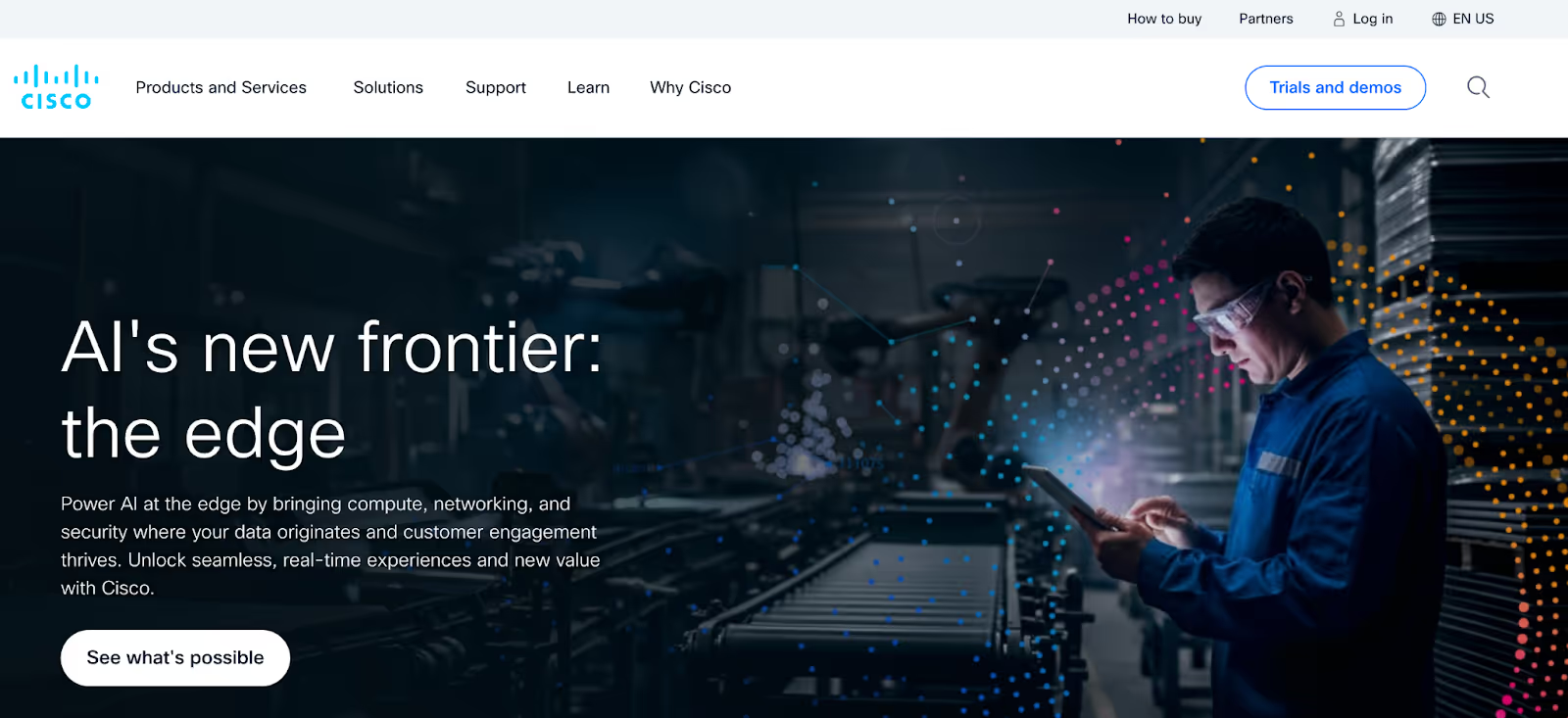
A sleek, professional design like Cisco’s homepage immediately communicates competence and reliability. The layout is modern, with compelling imagery and clear, readable fonts. Navigation is intuitive, featuring labels that match how people actually search. A clear call-to-action invites visitors to “See what’s possible,” guiding them to interact with the page.
Thoughtful design like this builds confidence in your brand at a glance.
Credibility Level: Proof Points
Once the foundation is solid, you can start adding proof that your company delivers results, like:
- Client Logos: This is where client logos come in, showing the companies that have trusted you with their business.
- Testimonials: Testimonials from real customers add a human element to that proof.
- Case Studies: Success stories take things further by showing specific results you've achieved.
- Team Photos and Professional Bios: Authentic photos and bios help visitors see that real people work at your company.
- Contact Information: Including your physical address and contact information signals that you're an established business, not a fly-by-night operation.
- Expertise: Mentioning how long you've been in business adds weight, especially in industries where experience matters. Twenty years of serving manufacturing clients signals proven processes, long-term reliability, and deep industry knowledge that a recently launched company has not had time to develop.
Authority Level: Industry Leadership
Authority signals show that your expertise is recognized beyond just your own website. These signals include:
- Industry Certifications and Awards: These demonstrate that third parties have validated your capabilities.
- Press Mentions and Media Coverage: Positive press shows that journalists consider you worth talking to.
- Membership in Industry Associations: Industry memberships signal that you're an active participant in your field.
- Thought Leadership Content: Authoritative content such as technical guides, research reports, or conference presentations positions you as an expert rather than just another vendor.
Validation Level: Third-Party Endorsement
The highest level of trust comes from endorsements that you didn't create yourself, such as:
- Ratings: Ratings on review platforms like Clutch or industry-specific directories carry weight because they come from verified customers.
- Strategic Partnerships: Partnerships with respected companies transfer some of their credibility to you.
- BBB Accreditation and Security Certifications: Accreditation and certifications provide additional third-party validation.
- Industry-Specific Certifications and Compliance Standards: For companies working with larger enterprises, certifications like ISO or industry-specific compliance standards often become prerequisites for even being considered.
For more on the technical and design foundations that support trust:
- B2B Website Speed Optimization: Performance That Impacts Revenue
- B2B Website Design Best Practices: The Complete Guide
Social Proof That Actually Works for B2B
Client Logos: The Right Way
A logo bar showing companies you've worked with is one of the most common trust signals on B2B websites, and also one of the most often done poorly. The key is making it feel authentic rather than desperate.
Always get permission before using a client's logo, and make sure you're using a high-quality version. Blurry or distorted logos look unprofessional and can actually hurt your credibility. If you work across different industries, consider organizing logos by sector so visitors can quickly find companies similar to their own.
Resist the urge to include every logo you can think of. A wall of 50 tiny logos is overwhelming and suspicious. Eight to twelve well-chosen logos typically make a stronger impression. Place your logo bar strategically, usually on the homepage just below the hero section, and on service pages where relevant.
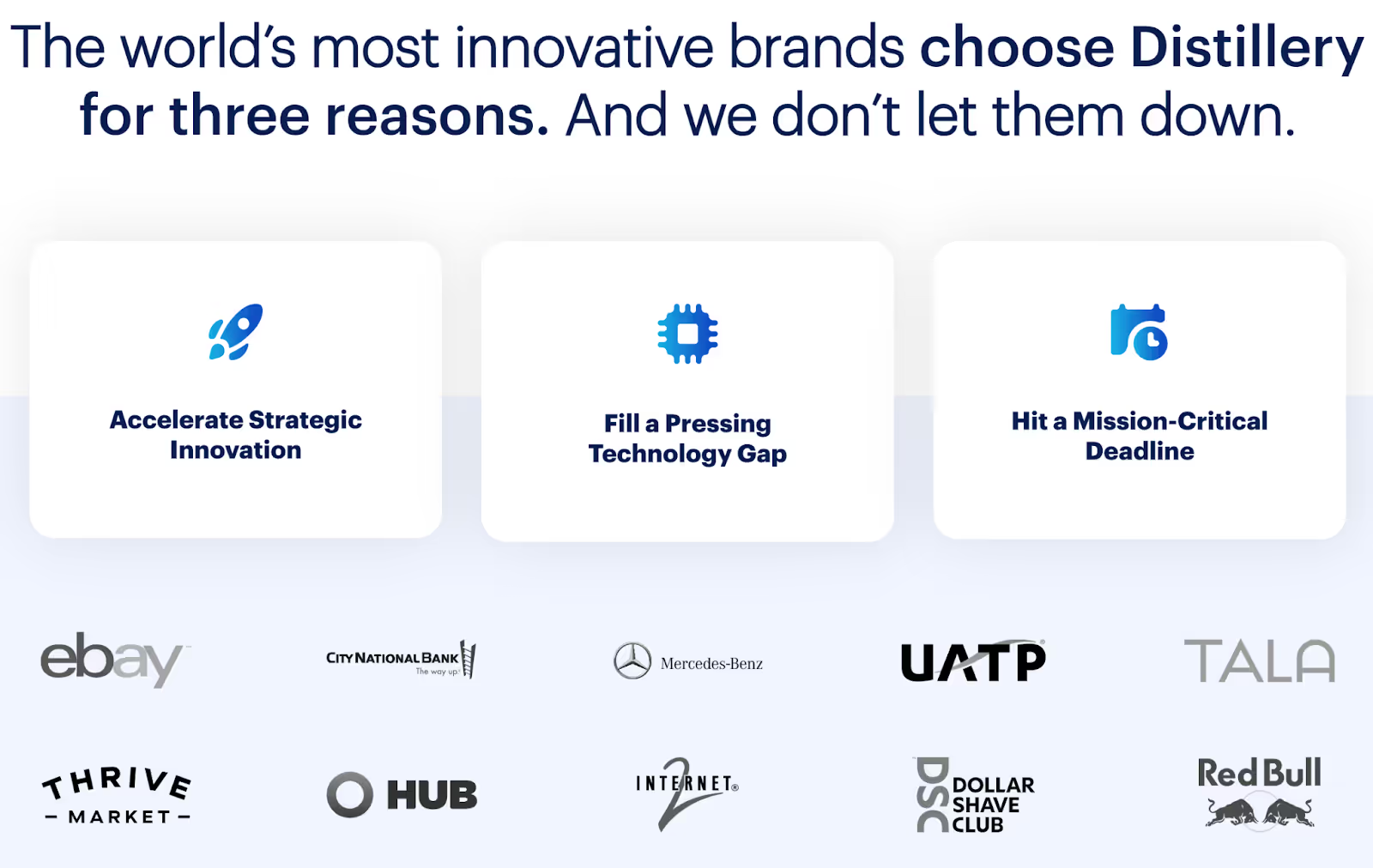
How Distillery Leverages Recognizable Logos to Build Credibility
A focused selection of recognizable logos builds trust without overwhelming visitors. For example, Distillery showcases logos from well-known companies like Ebay, Mercedes-Benz, and Red Bull just below their hero section. These logos quickly signal credibility, letting prospects know that trusted brands have already chosen to work with them. Strategically displaying logos in high-visibility locations reinforces a company’s reputation and reliability.
Testimonials That Convert
Generic testimonials don't move the needle. Quotes like "Great company to work with!" could be written about anyone and carry almost no persuasive power. The testimonials that actually build trust are specific about results.
A strong testimonial mentions specific:
- Outcomes
- Time saved
- Problems solved
- Improvements measured
It also includes the person's:
- Full name
- Job title
- Company
- Photo (ideally)
This level of detail makes the testimonial feel real and verifiable. Visitors can actually look up whether this person exists and whether they really work at that company.
Match your testimonials to the context where they appear. A manufacturing operations testimonial belongs on your manufacturing services page, not on a page about engineering consulting. When testimonials feel relevant to what the visitor is currently reading, they carry more weight.
Video testimonials are worth the extra effort for your most important proof points. Seeing and hearing a real customer talk about their experience creates a different level of connection than reading text. That said, don't force it. A genuine written testimonial beats an awkward video any day.
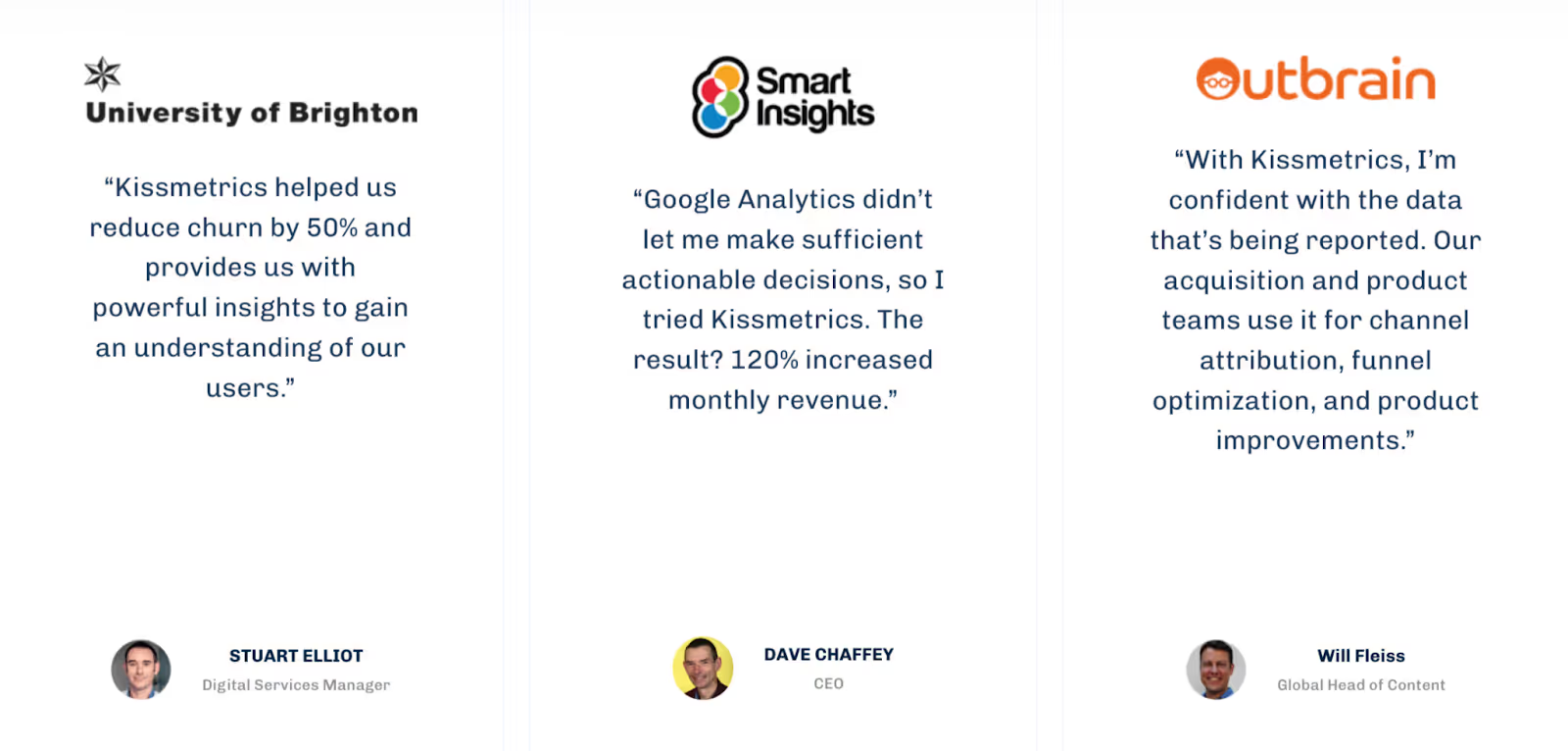
Kissmetrics: Making Testimonials Verifiable With Photos and Details
Including real photos and detailed information makes testimonials feel authentic and trustworthy. Kissmetrics’ “Customer Success” page highlights testimonials from a variety of companies, often including measurable metrics like “120% increased monthly revenue” and “Kissmetrics helped us reduce churn by 50%.” By providing photos, names, titles, and company information, the testimonials become verifiable, giving prospects confidence that these clients are real and the results are credible. Well-presented testimonials significantly strengthen trust with potential customers.
Case Studies: Your Most Powerful Trust Tool
Case studies are the heavy artillery of B2B trust signals. While logos and testimonials hint at your capabilities, case studies prove them with specific details. A well-crafted case study walks potential customers through how you solved a problem similar to theirs.
The most effective case studies follow a clear structure. They start with the challenge the client faced, explain the solution you provided, and end with the measurable results achieved. This format makes it easy for prospects to see themselves in the story and imagine similar outcomes.
Include specific numbers wherever possible. "Improved efficiency" is vague, but "reduced production downtime by 23%" is concrete and believable. Feature companies that your target audience will recognize or relate to. A construction firm wants to see case studies about other construction projects, not unrelated industries.
Don't bury your case studies where nobody will find them. Include calls-to-action linking to relevant case studies throughout your service pages, not just on a dedicated case studies page that visitors might never reach.
How Trajectory Approaches Case Studies for Maximum Value
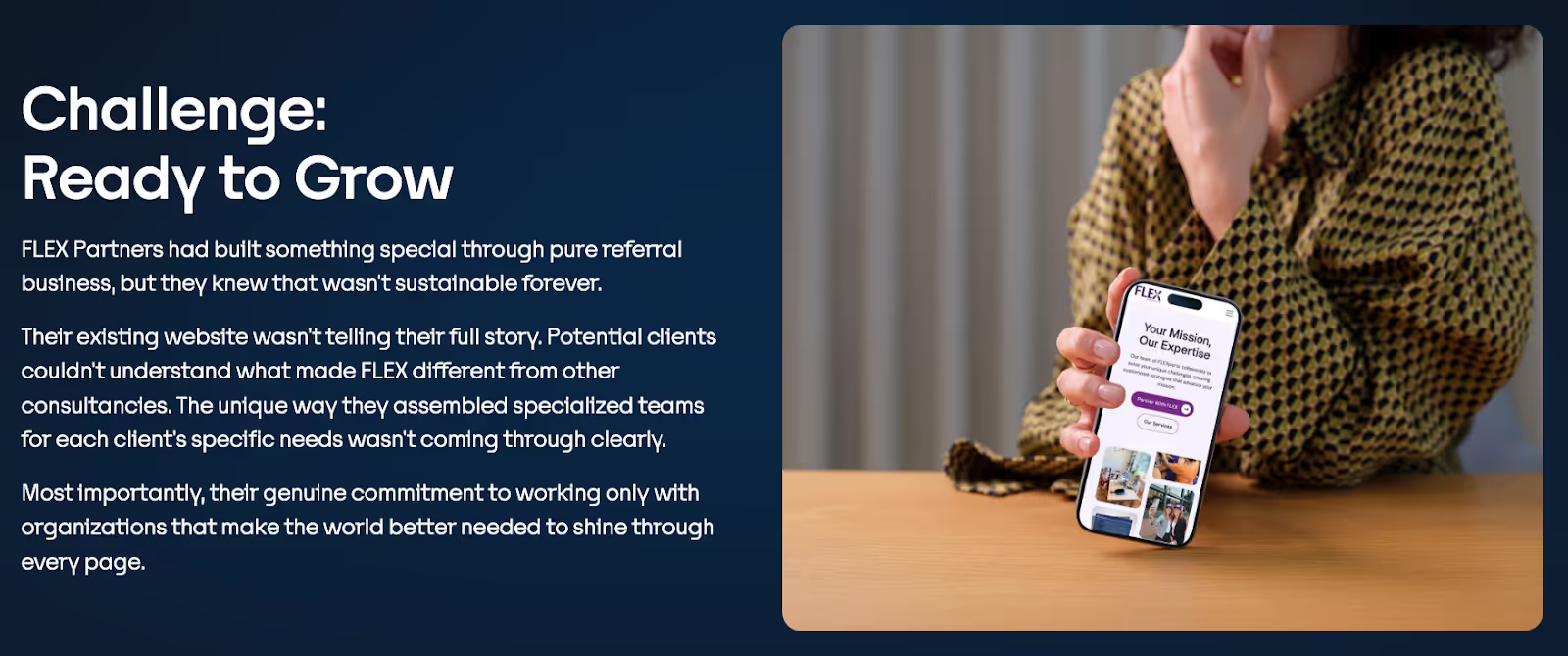
Effective case studies guide readers through the challenges you faced, the solutions you implemented, and the measurable results you achieved for your customers. Let’s take a look at the case study Trajectory created after working with consultancy FLEX Partners to redesign their firm’s B2B website.
First, we set the scene with an overview of the company’s mission and why they came to us: to obtain a professional consulting website that clearly explains their unique approach to assembling talent and supports their expansion into new markets. We accompany this summary with key outcomes from the website transformation to spark immediate interest in our process and results.

Next, we present the challenge we faced: to build a website that clearly underscores FLEX Partners’ differentiators and their genuine commitment to working with organizations that make the world a better place.
Then, we highlight our approach to the B2B website redesign project: lengthy conversations and multiple discovery calls that allowed us to map out their audience and identify what makes FLEX special.
Following our approach is our solution: an intuitive consulting website, built on Webflow, that immediately presents the organization’s unique value proposition. We created new service pages to clearly communicate their service offering, along with team profiles, case studies, and industry insights to build thought leadership and establish trust.

Finally, we share how FLEX Partners’ new website offers approachable entry points for complex services, clearly communicates their unique value, and retains the trust and authenticity that built their reputation in the first place.

Case studies that follow this clear structure (challenge, solution, results) make it easy for B2B buyers to imagine themselves working with your company and achieving similar outcomes.
Reviews and Ratings
Beyond testimonials you collect yourself, reviews on third-party platforms carry significant weight in B2B. Platforms like Clutch, G2, and industry-specific directories provide verified reviews that prospects trust more than testimonials on your own website.
Google Business Profile reviews matter even for B2B companies. When prospects search for your company name, your Google reviews appear prominently. A strong rating with recent reviews signals an active, reputable business. Empty or negative reviews create immediate doubt.
Encourage reviews by making it easy and timing it right. After a successful project completion is the natural moment to ask. Provide a direct link to the review platform so clients don't have to figure out where to leave feedback. Don't incentivize or fake reviews because sophisticated B2B buyers will notice, and platforms are increasingly good at detecting manipulation.
If you receive a negative review, respond gracefully and professionally. How you handle criticism tells prospects a lot about what working with you would be like. A thoughtful response to a complaint often builds more trust than a perfect five-star average.
Social Media Presence as Proof
Your LinkedIn company page serves as a trust signal that visitors will check, even if they found you through your website. An active page with recent posts, engaged followers, and polished branding reinforces that your company is established and current.
Regular posting activity signals that your business is alive and engaged with your industry. A LinkedIn page with no posts for six months raises questions. You don't need to post daily, but some consistent activity shows you're still in the game.
Employee presence on LinkedIn matters, too. When prospects can find your team members and see their professional backgrounds, it adds another layer of verification. Employees who engage with company content and share industry insights extend your credibility.
On the flip side, empty or poorly maintained social profiles can hurt you. If your LinkedIn page has no followers, outdated information, or looks abandoned, it might be better to not link to it at all until you can improve it.
For more on content strategy and lead generation:
- B2B Website Content Strategy: From Awareness to Decision
- B2B Lead Generation: Proven Strategies for Local Market Growth
Transparency as a Trust Builder
Pricing Transparency
Hiding all pricing information is a common B2B practice that's starting to backfire. Today's buyers do extensive research before ever reaching out to sales. When they can't find any pricing guidance on your site, they often assume you're either too expensive or trying to trap them in a sales process.
You don't have to publish your exact prices for every service. There are middle-ground approaches that give visitors helpful information while preserving flexibility. Including "starting at" prices, typical project ranges, or package tiers helps prospects self-qualify without committing you to fixed numbers.
Pricing pages can actually improve lead quality by filtering out prospects who aren't a good fit. If your minimum project size is $50,000 and you're clear about that, you'll spend less time on calls with companies who have $5,000 budgets. The leads who do come through are better informed and more serious.
Consider your competitive situation when deciding how much to reveal. In some industries, transparent pricing is becoming the norm, and hiding it puts you at a disadvantage. In others, custom pricing is genuinely necessary and expected. Know your market and make a deliberate choice.
Process Transparency
Showing your process or methodology builds trust by reducing uncertainty. When prospects can see exactly how you work, from initial consultation through delivery, they can envision what it would be like to work with you. This transparency sets realistic expectations and demonstrates professionalism.
Clear timelines matter, too. Telling prospects that your typical project takes twelve weeks is more helpful than vague promises to "get back to you." If you're honest about how long things take, clients are more likely to trust other claims you make.
FAQ sections can address real concerns that might otherwise prevent people from reaching out. Answer questions like:
- What happens if we need to change scope?
- How do you handle revisions?
- What does your communication process look like?
Answering these questions proactively shows that you understand what clients worry about.
For more on pricing and investment considerations:
About Page Trust Elements
Company Story That Builds Connection
Your About page is often more important than you realize. It's one of the most-visited pages on most B2B websites because prospects want to understand who they'd be working with. A generic corporate bio misses this opportunity.
An origin story that shows authenticity helps visitors connect with your company. Proactively answer questions like:
- How did you get started?
- What problem were you trying to solve?
- What makes you different from the dozen other companies offering similar services?
These details make your company feel human rather than corporate.
Mission and values statements can work, but only if they're genuine and specific. Generic values like "integrity" and "excellence" appear on every About page and mean nothing. Specific commitments about how you work and what you stand for carry more weight.
Including a timeline of company milestones adds credibility by showing your history. Major projects completed, certifications earned, and offices opened all tell the story of an established, evolving business.
Team Presence
Real photos of your team members build trust in ways that stock photos never can. B2B buyers want to see who they'd actually be working with. Professional headshots with genuine smiles feel welcoming without being overly casual.
Bios should include relevant credentials and experience, but also some personality. Include information like:
- Where did they work before?
- What expertise do they bring?
- What do they care about outside of work?
These details help prospects remember and relate to your team.
Links to team members' LinkedIn profiles add a layer of verification. Prospects can see career history, endorsements, and connections. When you're asking someone to trust you with a significant investment, making it easy for them to verify your credentials reduces friction.
Leadership visibility matters particularly for smaller companies where the founders are closely involved in client work. If prospects will be working directly with company leaders, showcasing those individuals prominently helps set expectations.
Building Trust With Real Team Photos and Professional Bios
Showing real team photos alongside professional bios help prospects feel connected to the people they’ll be working with. Five Star Breaktime Solutions, a premier provider of on-site food and beverage service for workplaces, shows authentic team photos on their “Leadership” page. Each photo is accompanied by the person’s name, title, a brief summary of their industry experience, and a sentence about the role they’ve played in the company’s success.
This transparency allows prospects to see the expertise behind your company, reassuring them that they are engaging with credible professionals. Authentic team representation fosters trust and strengthens relationships before a conversation even begins.

Location and Contact Transparency
A physical address signals legitimacy, even in an increasingly remote world. It shows that your business is established and accountable. For local businesses, it also helps with local search visibility.
Offer multiple ways to get in touch, including:
- Phone number
- Contact form
This gives visitors options based on their preferences. Some people want to call and talk to someone immediately. Others prefer to send an email and wait for a response. Limiting contact options limits leads.
Setting response time expectations is a small detail that builds trust. "We respond to all inquiries within one business day" tells prospects what to expect and signals that you take communication seriously.
For more on messaging and copy:
- B2B Website Messaging Framework: Copy That Resonates
- B2B Website Content Strategy: From Awareness to Decision
Technical Trust Signals
Security Indicators
HTTPS isn't optional anymore. The SSL certificate that enables HTTPS encryption is a basic requirement that visitors and search engines expect. Without it, browsers display security warnings that immediately erode trust.
Privacy policies and terms of service pages show that you take legal responsibilities seriously. Most visitors won't read them in detail, but they notice whether these pages exist. Cookie consent handling also matters, especially for visitors from regions with strict privacy regulations.
For industries dealing with sensitive data, additional security messaging can help. If you handle confidential client information, briefly mentioning your data protection practices can reassure cautious prospects.
Performance as Trust
A fast website signals professionalism. Slow load times frustrate visitors and suggest that your company might be behind the times technically. Even a small 1-second delay in page load time can reduce your conversions by 7% or more. If your website performs poorly, prospects might wonder about the quality of your actual work.
Mobile experience quality matters even for B2B sites. 80% of decision-makers use mobile devices at some stage of the buying process. They research solutions on their phones while traveling, between meetings, or from home. A site that's difficult to use on mobile creates friction exactly when you want to make a good impression.
Professional Infrastructure
Small details signal whether your business is established. Basics that visitors subconsciously assess include:
- A custom domain (not a free hosting URL)
- Professional email addresses (not Gmail)
- Working forms
Accessibility compliance is increasingly important both ethically and practically. A website that's difficult to use for people with disabilities excludes potential customers and signals carelessness about user experience.
For more on performance optimization:
- B2B Website Speed Optimization: Performance That Impacts Revenue
- B2B Website Conversion Optimization: A Data-Driven Approach
- Web Accessibility in Georgia: Practical Compliance for B2B Sites
Industry-Specific Trust Signals
Professional Services
Professional services firms benefit from displaying relevant certifications and licenses. CPA credentials, bar associations, professional engineering licenses, and similar qualifications signal that your team meets industry standards.
Mentioning continuing education and ongoing training shows that your team stays current with industry developments. In fields where regulations and best practices evolve, this currency matters to clients.
Manufacturing and Industrial
Quality certifications carry significant weight in manufacturing. ISO certifications, safety compliance records, and quality management credentials are often prerequisites for working with larger customers. Displaying these prominently helps qualify leads.
Facility photos or virtual tours give prospects confidence that you have real capabilities. Seeing manufacturing equipment, clean workspaces, and professional operations adds credibility that words alone can't provide.
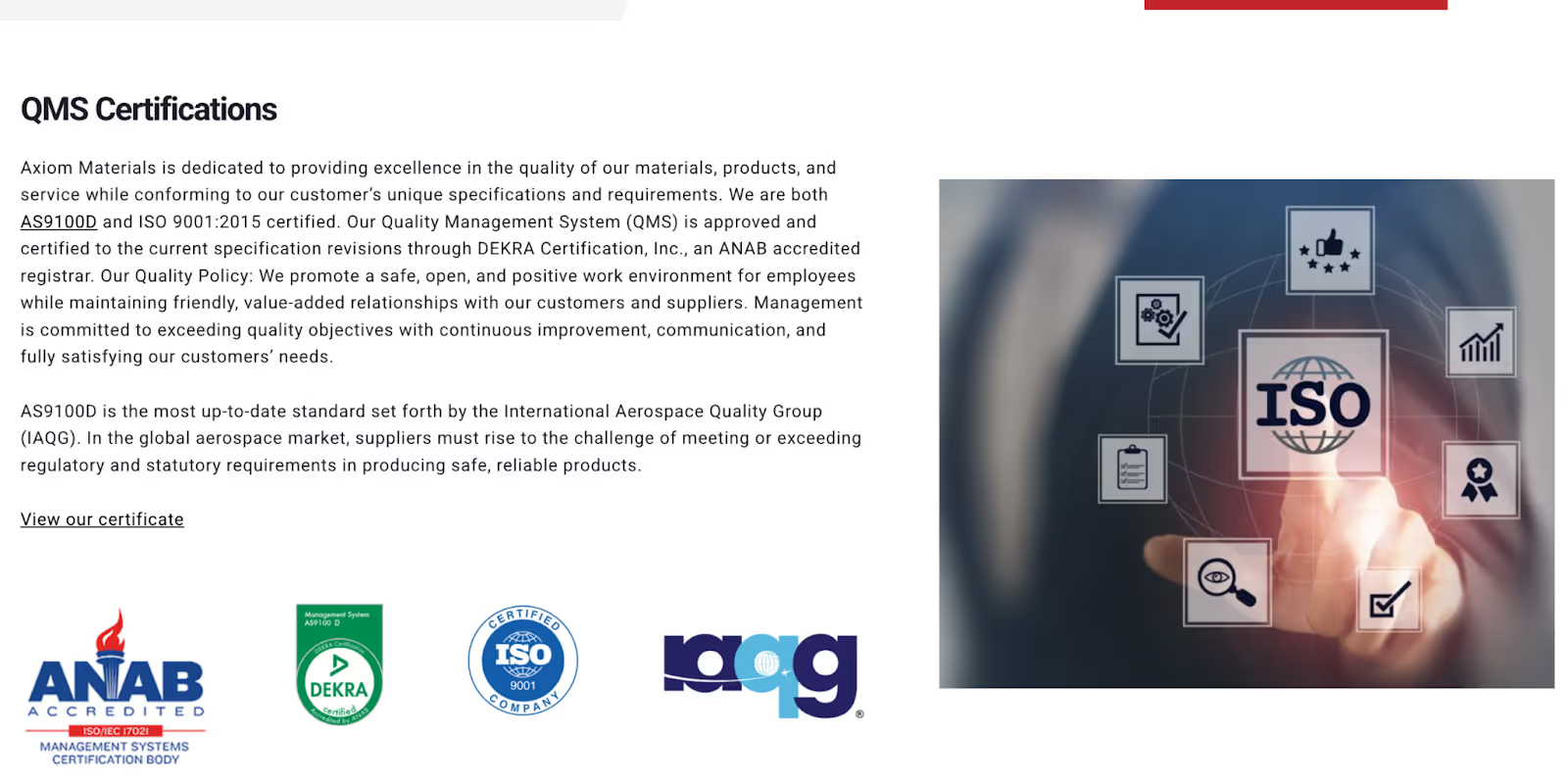
How Axiom Materials Highlights Certifications for Third-Party Validation
Quality certifications provide third-party validation that industrial buyers expect to see. B2B manufacturing company Axiom Materials prominently displays a variety of certifications on their “Quality Testing” page, including compliance with the International Aerospace Quality Group and accreditation by ANAB, DEKRA, and IAQG. They even provide a link to view their certificate, making the credentials easily verifiable.
Sharing certifications in a clear, organized way demonstrates professionalism and reassures prospects that your company meets industry standards.
Finding Your Industry's Trust Markers
Every industry has specific trust signals that matter most to buyers in that space. The best way to identify yours is to research what your competitors are emphasizing and to ask your existing customers what mattered to them when making their decision.
Industry associations often provide guidance on credentials and certifications that customers expect. Regulatory requirements may dictate specific disclosures or compliance statements. Understanding these expectations helps you meet the baseline that buyers anticipate.
For more on professional services marketing:
Trust Signal Placement Strategy
Homepage Trust Elements
Your homepage sets the first impression, so trust signals here matter most. A logo bar typically works well just below the hero section, giving visitors immediate proof that respected companies have worked with you.
In the hero area or just below, include key differentiators or proof points like:
- Years in Business: Shows longevity and expertise
- Number of Projects Completed: Demonstrates experience and capability
- Certifications Held: Reinforces credibility and industry compliance
- Featured Testimonial or Compelling Statistic: Provides early social proof
Footer trust elements are often overlooked but valuable. These might include:
- Industry association logos
- Certification badges
- Security indicators
Trust elements in the footer appear on every page and quietly reinforce credibility throughout your site.
Strategic Placement of Proof Points That Builds Immediate Credibility
Placing key proof points near the top of your homepage establishes credibility right away. Daikin features a rotating list of client logos below their hero section, immediately signaling trust.

Below the logos, an “Impact” section highlights key metrics such as “30+ years in the U.S.” and “5,000+ contractors trust and choose Daikin.” Prominently presenting proof points like these shows prospects that your company has experience, recognition, and widespread adoption, which helps build confidence from the very first glance.

Service and Product Pages
Testimonials on service pages should match the service being described. A prospect reading about your engineering services wants to hear from engineering clients, not from completely different industries. This relevance makes the proof more compelling.
Link to related case studies from service pages so prospects can see your work in action. Certification badges that apply to specific offerings should appear on those pages, not just on a general About page.
Contact and Conversion Pages
The pages where you ask visitors to submit information need extra trust reinforcement. Security reassurances near forms, such as "We'll never share your information" or SSL indicators, reduce anxiety about submitting contact details.
Include alternative contact methods on these pages, too. Some visitors may prefer to call rather than fill out a form. Making this option visible removes a potential barrier to conversion.
For more on site structure and navigation:
Common Trust Signal Mistakes
Mistakes That Hurt Credibility
Here are some common trust signal missteps that can actively damage your credibility rather than build it:
- Mistake #1 – Using Outdated Testimonials: Testimonials from years ago suggest that you haven't done notable work recently.
- Mistake #2 – Stock Photos: Using stock photos of your "team" that visitors recognize from other websites creates immediate distrust.
- Mistake #3 – Using Logos of Companies You’ve Never Worked With: This is a serious mistake that can lead to legal problems and reputation damage. Even if prospects don't notice immediately, this kind of misrepresentation tends to surface eventually.
- Mistake #4 – Exaggerated Claims or Overpromising: B2B buyers are sophisticated, and they recognize hype when they see it. Exaggerating claims and setting expectations you can’t meet makes them skeptical of everything else you say. Honest, specific claims are more believable than superlatives.
- Mistake #5 – Hiding Contact Information: Some companies make it surprisingly difficult to figure out how to reach them, but hiding this information is counterproductive. It frustrates prospects and suggests the company has something to hide.
- Mistake #6 – Broken Links and Outdated Content: These types of issues signal neglect. If you can't keep your website current, prospects may wonder about your attention to detail in actual project work.
The Trust Overload Problem
More trust signals aren't always better. Too many badges, logos, and certifications cluttering your design can feel desperate rather than confident. A wall of credentials actually reduces impact because nothing stands out.
Irrelevant certifications confuse visitors. If a badge doesn't mean anything to your target audience, including it just adds visual noise. Focus on the credentials that your specific buyers recognize and care about.
When trust signals feel excessive, they can backfire. A company confident in its reputation doesn't need to prove itself on every square inch of the website. Strategic placement of meaningful credentials is more effective than comprehensive coverage of every possible trust marker.
Credentials That Avoid Overwhelming Visitors: Why Organization Matters
A curated selection of relevant trust badges is more effective than an overwhelming wall of credentials. Vulcan Painters, Inc. showcases SSPC and ISO certifications along with recognition as a top finalist for the 2024 FCA International CREST Awards in its website footer. They display a healthy amount of trust signals, and the three-column layout makes the badges easy to scan at a glance.
However, the visual alignment could be cleaner. The badges vary in size and spacing, which reduces the sense of polish. With small adjustments to alignment and consistency, the same set of credentials could look even more intentional and professional.

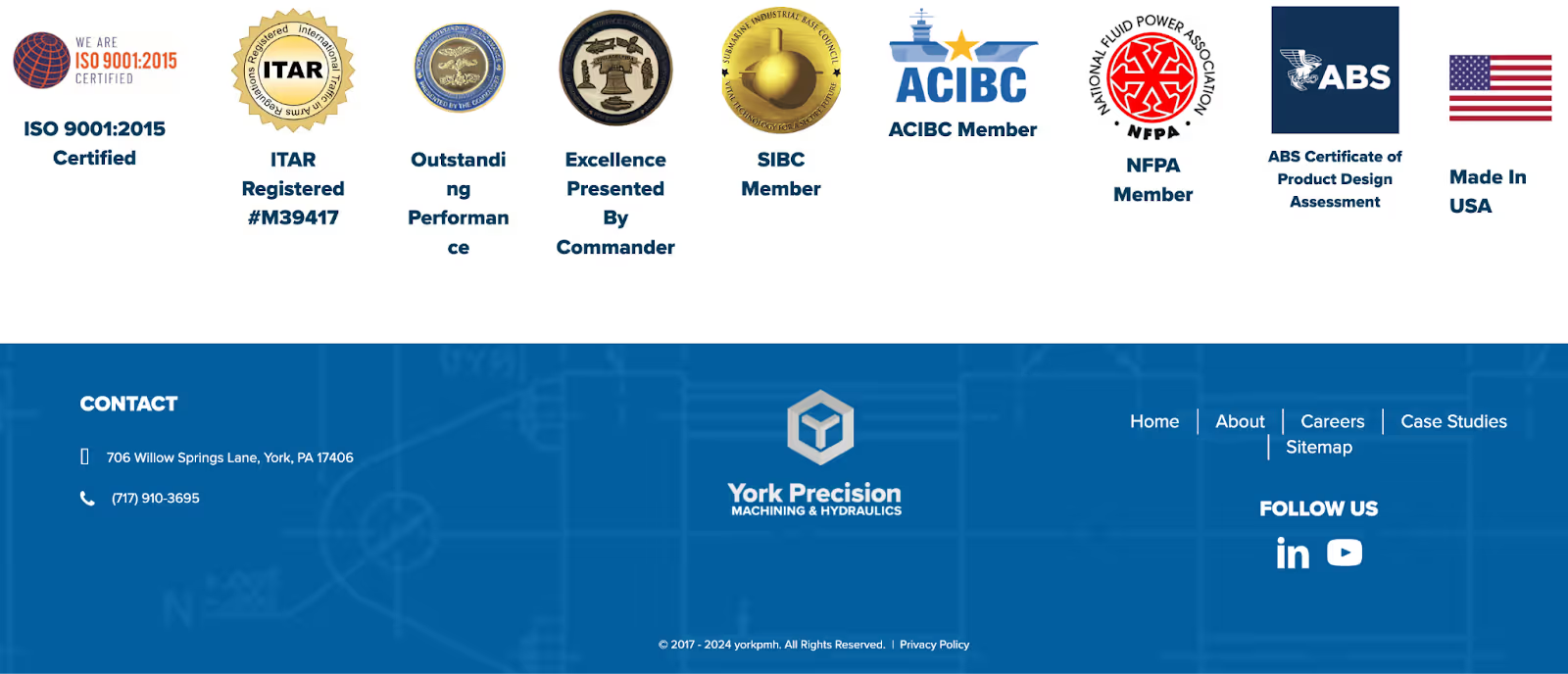
Let’s take a look at another example that demonstrates a similar challenge: York Precision Machining & Hydraulics displays too many credentials without a clear hierarchy. The sheer volume of badges and inconsistent alignment can overwhelm visitors instead of reassuring them. A simplified, more organized layout that highlights the most meaningful certifications would have a stronger impact.
For more on knowing when to update your site:
Measuring Trust Signal Effectiveness
Key Metrics to Watch
Monitor key metrics such as:
- Trust Signals: Compare your form submission rates before and after adding or improving trust elements. If you made changes to specific pages, look at those pages individually rather than site-wide averages. Trust signals should improve your conversion rates.
- Time on Page: Focus specifically on your About page and case study pages to learn whether visitors find your credibility content engaging. If people are spending time reading your team bios and case studies, those elements are doing their job.
- Bounce Rate on Key Pages: Bounce rate tells you whether trust signals are holding visitor attention or whether something is still pushing them away. A high bounce rate on your homepage despite good traffic suggests visitors aren't finding what they need to feel confident.
- Form Completion Rates: Completion rates measure the final hurdle. If visitors get to your contact page but don't complete the form, trust concerns might still be blocking them. Adding reassurances near the form might help.
- Changes in Sales Cycle Length: Sales cycle length changes can indicate trust impact over time. If prospects are reaching out more informed and confident, your sales team should see shorter paths to closing deals.
Testing Trust Elements
A/B testing specific trust elements can reveal what works for your audience. See what impacts conversions by testing different:
- Testimonial placements
- Logo bar arrangements
- Badge combinations
Not every change is worth testing formally. Sometimes you just need to make improvements based on common sense and best practices. Save rigorous testing for the elements that have the biggest potential impact.
For more on measuring website ROI:
- Website ROI: How B2B Firms Calculate Payback
- B2B Website Conversion Optimization: A Data-Driven Approach
Building Trust Over Time
Trust Is Earned, Not Installed
Adding trust signals to your website is important, but it's not a one-time task. Real trust comes from consistently delivering value and accumulating proof over time. The best trust signals are ones you earn through genuine achievements.
Regular content updates signal that your business is active and engaged. A blog with posts from three years ago looks abandoned. Fresh content, even occasional updates, shows that your company is still actively working and thinking about your industry.
Responding to reviews and feedback, whether positive or negative, demonstrates that you care about client experience. This responsiveness becomes visible to future prospects researching your company.
As you grow, your proof points should evolve:
- Replace older case studies with new ones
- Update certifications to reflect current standards
- Update team pages to reflect current employees
Keeping these elements current shows that your website represents who you are today, not who you were years ago.
Creating a Trust Signal Roadmap
Start with the foundation elements if you don't have them in place. Clean design, working functionality, and basic security are prerequisites for everything else. Without this foundation, more advanced trust signals won't be effective.
Add proof points as you collect them. After completing a successful project, ask for a testimonial. After working with a recognizable client, request logo permission. Build your case study library gradually with each notable engagement.
Work toward authority signals over time. These take longer to earn because industry recognition, press coverage, and thought leadership don't happen overnight. But they compound in value as you build them.
Conduct regular audits of your trust elements, asking yourself:
- What's outdated?
- What's missing?
- What's no longer relevant?
Keeping your credibility markers current is ongoing work, not a project you complete once.
Bringing It All Together: Turning Proof into Trust
Trust signals aren't decoration for your B2B website; they're essential infrastructure. Without them, qualified prospects leave to find competitors who do a better job proving their credibility. With them, visitors feel confident enough to take the next step and reach out.
Remember the hierarchy: foundation first, then credibility, then authority, then third-party validation. You can't skip to advanced trust signals without having the basics in place. A certification badge won't save a website that looks unprofessional or loads slowly.
Take Small Actions to Create Big Conversion Wins
Start where you are. Even small improvements to your trust signals can impact conversion rates.
- If you don't have testimonials → ask a client this week
- If your team page uses stock photos → schedule a photo session
- If your case studies are buried → add links from your service pages
The goal isn't to plaster every possible credential on your website. It's to provide the specific proof that your target buyers need to feel confident choosing you. Focus on quality over quantity, relevance over comprehensiveness, and authenticity over image.
Trust is ultimately built through consistent performance, not just website elements. But your website is often where that trust begins. Make sure it's doing its job.
