
Your website copy sounds fine. It mentions your services, lists your capabilities, and has a "Contact Us" button at the bottom. But it's not generating leads, and you can't figure out why. The standard copywriting advice you've been following was written for businesses selling shoes or software subscriptions, not for companies selling complex B2B services to cautious buyers.
Here's the problem most business-to-business companies miss: your website copy isn't talking to one person. Six to ten people at the buying company will visit your site before anyone picks up the phone. The CFO, the end user, the IT lead, and the CEO all land on the same pages, but they're each looking for something different. Most B2B websites speak to one of these people and lose the rest.
This article covers what makes B2B website copywriting fundamentally different from B2C or SaaS copywriting, how to write for a buying committee without sounding like a committee wrote it, and how to handle the page-level challenges (jargon, proof, SEO, technical depth vs. clarity) that trip up most B2B sites.
Why B2B Website Copy Is a Different Animal
General copywriting advice breaks down fast for B2B companies. The tactics that work for direct-to-consumer brands or SaaS startups don't transfer to manufacturers, professional services firms, or engineering companies. The buying process is longer, the stakes are higher, and the audience isn't one person. Understanding these differences is the first step toward b2b marketing that actually moves the needle.
The Committee Problem
B2B purchases involve multiple decision-makers with different concerns, expertise levels, and evaluation criteria. A single page on your website needs to satisfy a technical evaluator, a financial decision-maker, and an end user at the same time. This isn't just a "know your target audience" problem. It's a structural one.
Traditional copywriting assumes one reader. You build a buyer persona, you write to that person, and you optimize for their journey. But in B2B, the person who finds your website is rarely the person who signs the check. The champion who discovered you has to sell you internally, which means your website copy needs to arm them with answers for every question the rest of the committee will raise.
Long Sales Cycles Change What Copy Needs to Do
In B2C, copy closes the sale. In B2B, copy's job is to get someone to the next step: a call, a demo request, an internal conversation. The website is a research tool, not a checkout counter. Copy that tries to close too hard on a first visit feels desperate and misreads the decision-making process entirely.
B2B buyers visit your site multiple times across weeks or months. They're comparing you to three or four other options. They're printing pages and forwarding links to colleagues.
Your copy needs to hold up under that kind of scrutiny, which means it needs substance, not just sizzle. The purchasing decision happens in conference rooms, not on your website.
Expertise Without Jargon: The B2B Balancing Act
Your copy has to prove the company knows what it's doing without alienating the non-technical people in the room. This is the tightrope every B2B company walks. Go too simple and the engineers dismiss you, go too technical and the executives bounce. Most B2B sites fall off one side or the other.
The fix isn't picking one audience. It's structuring your copy so both audiences can get what they need. A plain-language headline that communicates value, followed by a paragraph with enough technical specificity to prove competence.
Readability and expertise aren't opposites. They're layered, and the next section shows exactly how to do that.
For more on how B2B and B2C approaches differ:
Know the Room: Writing for Every Stakeholder
This is where b2b copywriting gets practical. You can't write for "the buyer" because there isn't just one. You're writing for a committee of people who all need something different from your website.
The good news: you don't need separate pages for each person. You need b2b content that layers information so multiple audiences can self-serve from the same page.
The Roles in a Typical B2B Buying Committee
Every B2B purchase involves some version of these roles. The titles change by industry, but the functions are consistent. Understanding what each person scans for on your website is the foundation of writing b2b copy that converts.
- The Champion. This is the person who found you. They're already interested and they want you to win. What they need from your website: clear, shareable content they can forward to colleagues. If your copy doesn't make their job of selling you internally easier, you'll lose deals you should have won.
- The Technical Evaluator. This person needs specifics. Specs, integrations, methodologies, certifications. They're looking for proof that you can actually deliver what you promise. Vague capability statements make them nervous.
- The Financial Decision-Maker. ROI, total cost, timeline, risk. They want to know what this costs, how long it takes, and what happens if it goes wrong. They skim headlines and jump to numbers.
- The End User. The person who will actually work with whatever you deliver. They care about the day-to-day experience: ease of use, training requirements, workflow impact. Their pain points are practical, not strategic.
- The Legal or Compliance Reviewer. Not always present, but when they are, they're checking for risk signals. Privacy policies, security certifications, insurance, contractual terms. They're looking for red flags, not features.
The mistake most B2B companies make is building buyer personas and then writing copy aimed at just one of them. Real b2b content needs to account for all of these people reading the same page.
Layered Copy: Depth on Demand
The most effective technique for writing to a committee is progressive disclosure. Write the top layer (headlines, subheadings, opening sentences of each section) for the broadest audience. Then let detail-hungry readers go deeper through supporting paragraphs, expandable sections, or linked resources.
Think of it this way: the VP of Operations should be able to scan your service page in 30 seconds and understand what you do, who you do it for, and why it matters. The engineer on their team should be able to spend five minutes on the same page and find the technical specifics they need. Both readers are served. Neither feels ignored.
A manufacturing company's "capabilities" section is a good example. The headline might read "Precision Metal Fabrication for Aerospace and Defense." The first paragraph explains the business outcome. The next section provides tolerances, materials certifications, and equipment specs.
The executive gets what they need in five seconds. The engineer gets what they need by reading further. Same page, same content, two different levels of engagement.
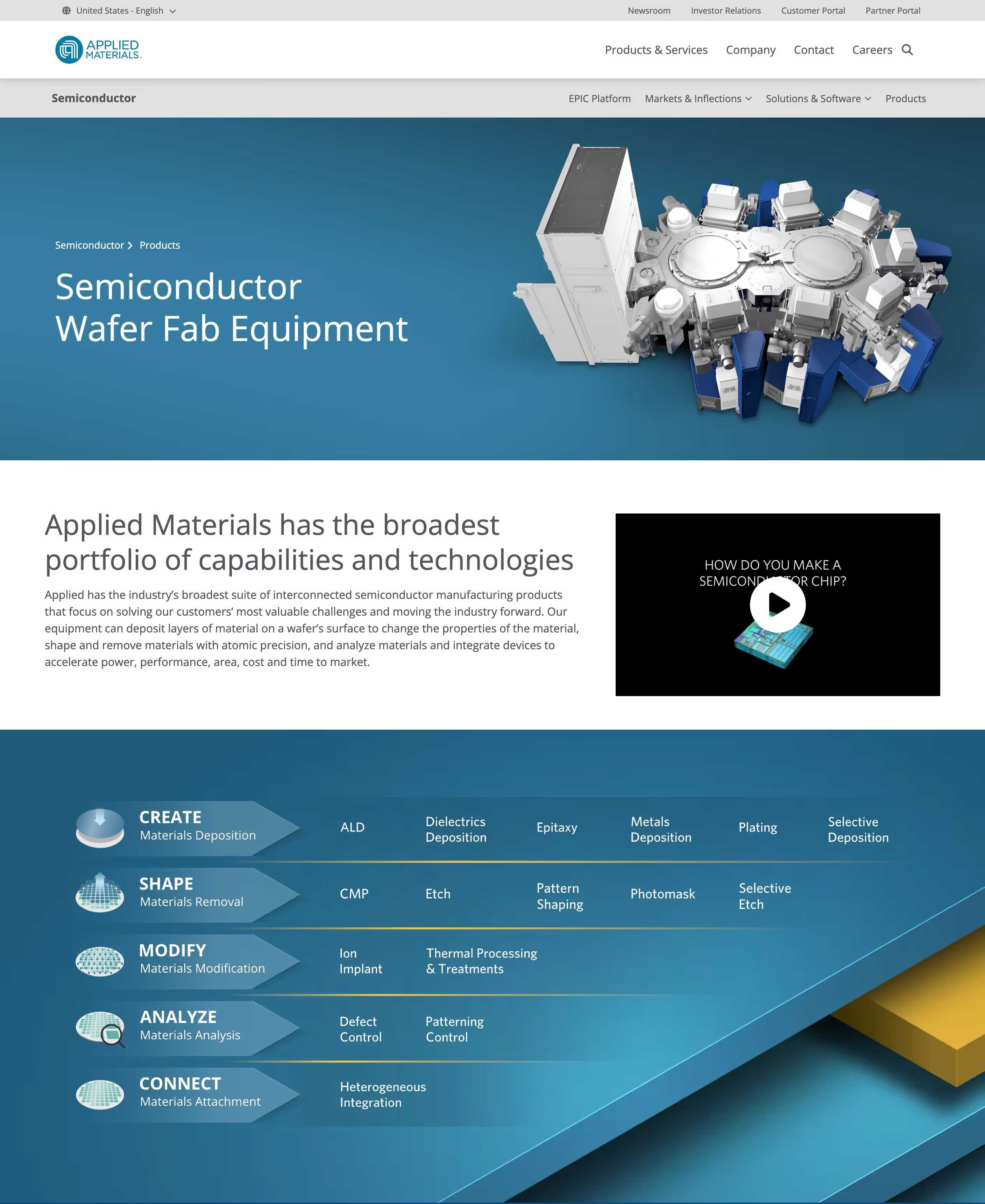
Applied Materials' product page demonstrates this in practice. The hero communicates the broad category. The next section states the capability scope for anyone evaluating at a high level. Then the taxonomy (CREATE, SHAPE, MODIFY, ANALYZE, CONNECT) breaks capabilities into functional categories, each with specific sub-technologies listed beneath it. A VP of Engineering scanning this page understands the company's scope in seconds. A process engineer looking for selective deposition or defect control finds exactly what they need without leaving the same page.
One Page, Multiple Readers: How to Structure It
Structuring a page for multiple readers isn't complicated, but it does require intentional formatting. Scannable headlines that convey value at a glance serve the executive who's skimming. Substantive paragraphs below those headlines serve the evaluator who's reading closely. Pull quotes and callout boxes highlight key proof points for anyone in between.
The principle is simple: every section should communicate its core message at the heading level. If someone reads nothing but your H2s and H3s, they should still understand what your company does and why it's worth considering. The supporting text adds depth, nuance, and evidence for readers who want it.
Subheadings are doing double duty here. They're navigation for scanners and keyword signals for search engines. Write them to be informative, not clever. "Custom Fabrication for Medical Devices" beats "What We Do Best" every time.
For more on structuring navigation for different buyer paths:
Voice and Tone for B2B: Confidence Without Corporate Speak
Most B2B websites sound like they were written by a committee, which is ironic given what this article is about. The copy is technically correct, strategically inoffensive, and completely forgettable. Building a strong B2B brand starts with how the company sounds on its own website, and most b2b businesses haven't found their voice yet because they've confused "professional" with "boring."
Kill the Corporate Voice
You know the copy when you see it. "We are a leading provider of innovative, end-to-end solutions that empower organizations to achieve their strategic objectives." It says nothing. It could describe a software company, a consulting firm, or a commercial laundry service. Yet this kind of messaging persists across B2B websites because it feels safe.
It's not safe. It's invisible. Potential customers have seen this language a thousand times, across every b2b marketing channel from websites to LinkedIn to trade publications. It signals "we had nothing specific to say, so we said something vague that no one on the approval chain could object to." Here are the most common offenders and what to say instead:
- "Leverage" or "Utilize." Just say "use." If you mean something more specific, name it.
- "End-to-end solutions." Describe what you actually do, start to finish. "We handle design, fabrication, and installation" is concrete.
- "Holistic approach." Usually means "we do more than one thing." Say that instead.
- "Best-in-class." Says nothing without proof. Replace with a specific result: "highest on-time delivery rate in the region."
- "Synergy." Remove this word entirely. Describe the specific benefit of things working together.
- "Empower." What does the client actually gain? More revenue, less downtime, fewer returns? Say that.
- "Innovative." Show the innovation. Describe the approach, the technology, or the result. The word alone is meaningless.
Confidence Comes From Specificity
The fix for bad B2B copy isn't being casual. It's being specific. "We've completed 200 projects with a 100% on-time delivery rate" beats "We deliver results with integrity and excellence" every time.
Specific numbers, specific outcomes, specific language. Vague copy isn't safe. It's just forgettable.
This is what effective b2b copywriting looks like in practice. Not cleverness, not personality for personality's sake, but specificity backed by evidence. When your copy includes real numbers, named capabilities, and concrete outcomes, it communicates expertise without having to claim it.
The reader fills in "these people know what they're doing" on their own. You don't have to say it for them.
Finding Your Company's Actual Voice
Most B2B companies already have a voice. It comes out in sales calls, in how the founder explains the business at a networking event, in emails to trusted clients. The website just doesn't reflect it yet.
The problem isn't that the company lacks personality. The problem is that the website went through an approval process that sanded off everything distinctive.
Here's a practical test: record your next sales call (with permission) and transcribe it. Then compare that transcript to your website copy. If they sound like two different companies, your website copy needs work.
The sales conversation is almost always better because it's responding to a real person with real questions. That responsiveness and specificity should carry over to the website, your social media presence, and every other touchpoint in your b2b marketing.
Read your copy out loud. If it doesn't sound like anyone at your company would actually say it, rewrite it until it does. B2B branding isn't about inventing a voice. It's about capturing the one you already have.
Page-by-Page Copywriting Guidance
Principles are useful, but B2B copywriting gets real when you sit down to write specific pages. Each page on your site has a different job, and the copy approach needs to shift accordingly. These are the pages where B2B companies most commonly stumble, and where getting the copy right has the most impact on conversions.
Homepage: The 5-Second Pitch
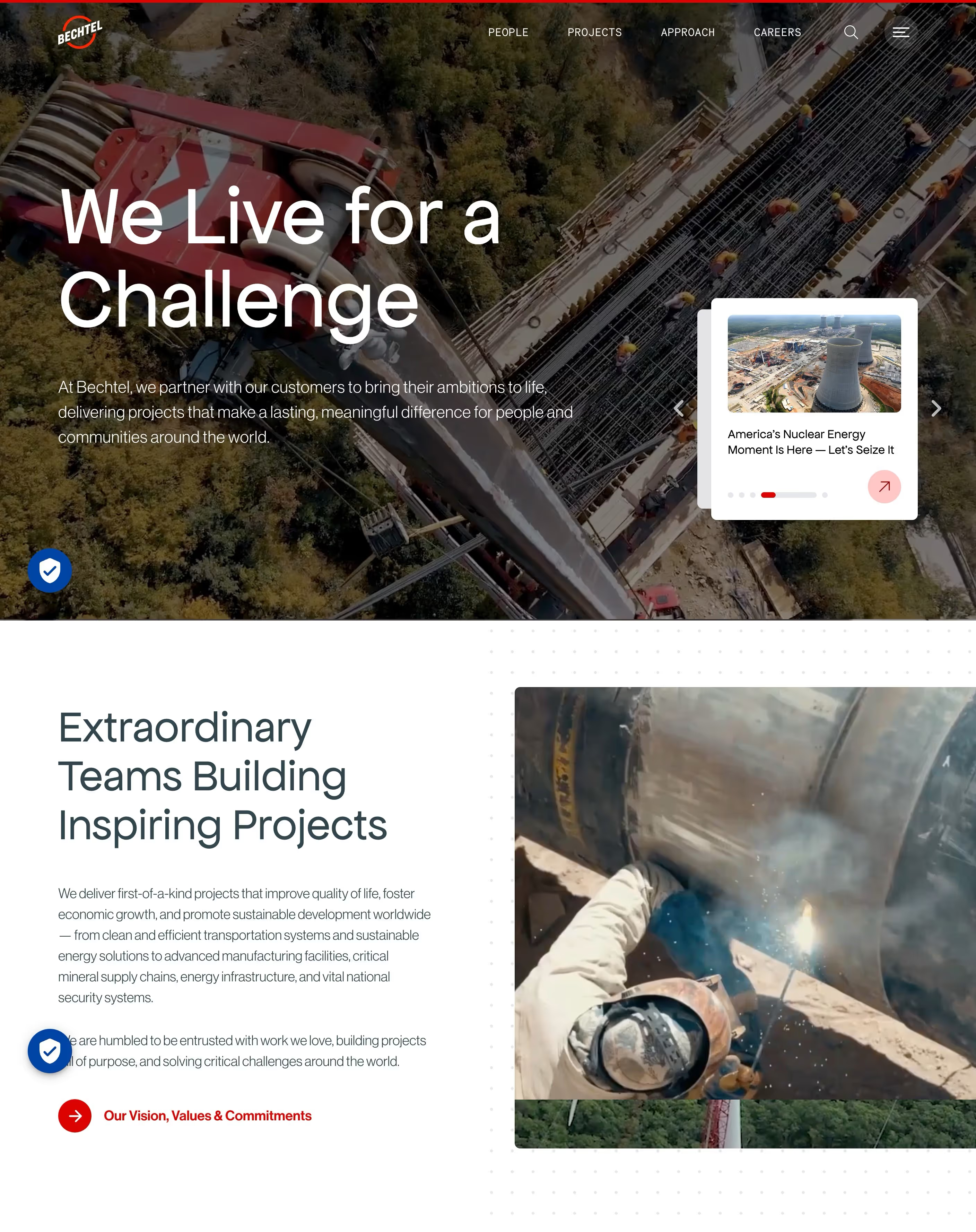
Your homepage hero needs to pass what some copywriters call the "grunt test." Can a stranger, within five seconds, understand what you do, who you do it for, and why it matters? For B2B companies with complex offerings, this is brutally hard. The temptation is to describe everything, which means the hero ends up describing nothing.
Lead with the pain point you solve, not the product you sell. "Precision machining for aerospace components" is better than "Your partner for manufacturing excellence." Keep the hero to one clear value proposition and one call to action. Everything else can live further down the page. The homepage hero's only job is to make the visitor want to keep scrolling.
For more on homepage strategy beyond just copy:
Service and Product Pages: Features Into Outcomes
The most common mistake on B2B product pages is listing features and capabilities without connecting them to business outcomes. The technical evaluator wants specs. The financial decision-maker wants to know what those specs mean for their operation. Effective service pages do both.
Lead with what the client gets: reduced downtime, faster production, fewer errors, lower total cost. Then support those claims with the technical details that explain how. A service page that says "5-axis CNC machining with tolerances to +/- 0.0005 inches" speaks to the engineer. But it needs a preceding line that says "Parts that fit right the first time, eliminating rework and production delays" to speak to everyone else.
About Page: Prove You're Real, Not Perfect
B2B buyers check the About page to answer one question: "Can I trust these people?" The copy should convey competence and character, not a sanitized corporate biography.
Specific details beat generic claims every time. A founding story is more memorable than a mission statement. Named team expertise is more credible than a headshot grid. Client results are more persuasive than years in business.
This page is also where thought leadership credibility matters. Industry involvement, published research, conference speaking, advisory board participation all signal that the company is embedded in their industry, not just selling into it.
Keep it specific: "Board member of the National Tooling and Machining Association" means something. "Industry leader" means nothing.
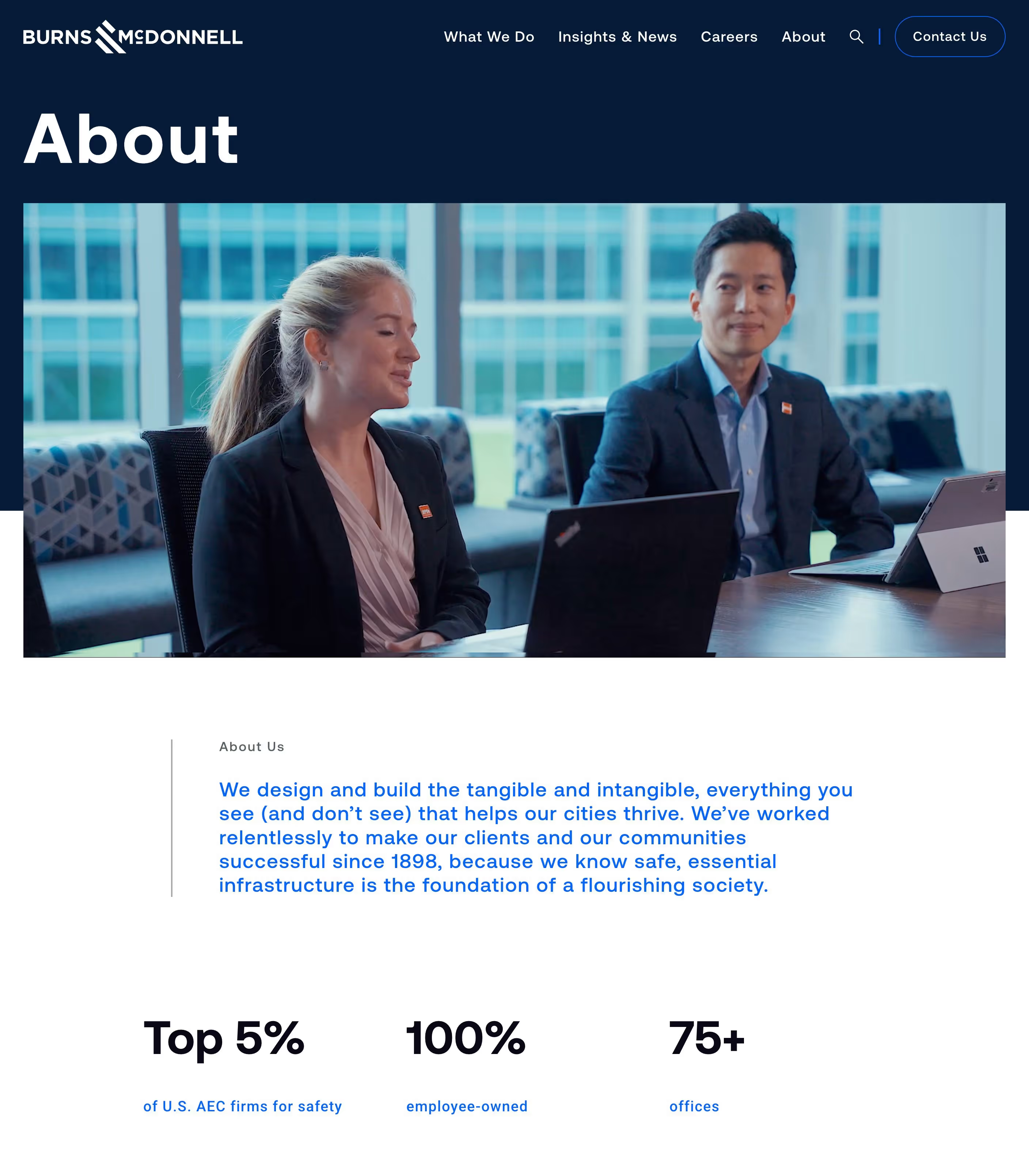
Burns & McDonnell's about page demonstrates this principle. Within seconds of landing on the page, you know three things: the company has been around since 1898, it's 100% employee-owned, and it ranks in the top 5% of U.S. AEC firms for safety. Those three data points do more trust-building than any amount of copy about "passion for excellence" or "commitment to quality." The visitor's internal response isn't "that sounds nice." It's "these people are serious." That's the reaction your about page should generate.
Case Studies: Let the Work Speak (With Structure)
Case study copy should follow a clear framework: situation, challenge, solution, results. Most B2B companies know this. What they get wrong is the tone. Case studies that sound like press releases, scrubbed clean of any personality or specificity, don't build the trust they're supposed to. They also double as sales enablement tools, so your sales team should be able to hand a case study to a prospect and have it close deals on its own.
Conversational tone, specific numbers, and honest context build more credibility than polished perfection. "This project had a tight timeline because the client's current vendor had backed out mid-contract" is more compelling than "The client required an accelerated timeline." Real stories with real constraints make your case studies believable. Made-up-sounding ones make potential customers wonder what you're hiding.
Landing Pages: Campaign Copy That Converts
Landing pages for B2B campaigns operate under different rules than permanent site pages. When someone clicks through from a paid search ad, a LinkedIn campaign, an email, or a content marketing offer, the copy needs to match the message that brought them there. This message-match is the single most important factor in landing page conversions.
The rules are straightforward, and they apply whether you're a manufacturer, a consulting firm, or a SaaS company selling to enterprises: one page, one offer, one call to action. Remove the main site navigation so there's nowhere to wander. Make the headline echo the language from the ad or email that brought the visitor here. The copy should explain what they're getting (a white paper, a guide, an assessment, a consultation), what's in it for them, and exactly what happens when they click the button.
Gated content offers like white papers, industry guides, and assessment tools are the workhorses of B2B landing pages. They work because they offer value before asking for commitment. The landing page copy should sell the content, not the company. "Download our guide to reducing scrap rates in metal stamping" is a clear, low-friction offer. "Contact us to learn how we can help optimize your operations" is a sales pitch disguised as an offer.
FAQ Pages: Answering What the Committee Is Really Asking
FAQ pages are one of the most underused tools in B2B copywriting. They let you address specific concerns from different committee members in a format that's easy to scan. The CFO's cost questions, the IT lead's integration questions, the end user's workflow questions, all answered in one place.
The key is writing FAQs from real sales conversations, not from what you wish people would ask. The questions your sales team hears repeatedly are the questions that belong on this page. "How long does implementation take?" and "What happens if we need to change scope mid-project?" are the kinds of real questions that build trust. "Why are you the best choice?" is not a real FAQ; it's marketing disguised as a question.
SEO and B2B Copywriting: Writing for Both Humans and Algorithms
B2B companies tend to fall into one of two SEO traps. They either ignore search engines entirely, relying on referrals and direct traffic, or they over-optimize at the expense of clarity. Neither approach works. The goal is copy that ranks for the terms your potential customers actually search for while still reading like it was written by a knowledgeable human.
The B2B SEO Copywriting Balance
Start by targeting terms your buyers actually use, not the internal jargon your team uses. If your industry calls it "thermoforming" but your buyers search for "plastic molding," your website copy should use the buyer's language, at least in the headlines and opening paragraphs. Technical terms still belong in the supporting detail where they demonstrate expertise to technical evaluators.
Write naturally first, then optimize second. Structure your content so search engines can parse the same layered information your human readers need.
Subheadings serve as both scannable anchors for readers and keyword signals for search engines. That's not a coincidence. Well-structured content is good for both audiences.
What Most B2B Sites Get Wrong About SEO Copy
The most common mistake is stuffing keywords into copy that's already fighting to serve multiple audiences. If your service page reads awkwardly because you forced "industrial automation solutions Atlanta" into three paragraphs, the SEO benefit isn't worth the credibility cost. Readers notice. Decision-makers especially notice.
Another common mistake is ignoring long-tail terms. B2B search intent is often highly specific: "FDA-compliant packaging line for pharmaceutical manufacturing" is a real search query with real commercial intent. A strong content marketing strategy supports your core website copy by capturing this kind of top-of-funnel search traffic through blog posts and resource pages, so your main service pages can focus on converting visitors who already know what they need.
Don't treat blog content and website copy as the same thing. They're different types of content with different jobs. Blog posts attract and educate. Website pages convert.
The SEO approach should reflect that distinction. Blog posts can target broader informational keywords. Service pages should target specific, high-intent commercial terms.
For more on B2B SEO strategy:
For building a broader content ecosystem:
The Proof Problem: Making Claims Believable
B2B buyers are skeptical by default. They've been burned by vendors who oversold and underdelivered. Every claim on your website is evaluated against that backdrop of healthy skepticism.
The solution isn't making fewer claims. It's proving the ones you make.
Show, Don't Claim
"We're the best" is meaningless. "We've completed 200 projects with a 100% on-time delivery rate" is evidence. The principle is simple: every claim should be followed by proof within the same section. If you can't prove it, soften the claim or cut it entirely.
This doesn't mean every paragraph needs a statistic. It means every assertion should be grounded. "Our process reduces errors" becomes "Our process reduced error rates by 40% for [client name]." "We have deep expertise" becomes "Our engineering team holds 15 certifications across welding, electrical, and structural disciplines." The specificity is the proof. Metrics are the strongest form of it, but named details work too.
Social Proof That Works in B2B
Not all social proof is created equal, and for a buying committee, the bar is higher than a five-star review. Here's what actually builds trust with B2B decision-makers and what doesn't:
- Specific client results with numbers. "Reduced production downtime by 35% within 6 months" is proof. "Helped improve operations" is noise.
- Recognizable logos with context. A logo wall is better than nothing, but a logo with a one-line result underneath it is significantly better. "Deloitte: Rebuilt their proposal portal, reducing turnaround time by 50%."
- Testimonials that name the person's role and company. "Sarah Chen, VP of Operations at [Company]" carries weight. An anonymous quote does not. These also perform well when repurposed for LinkedIn and other social media channels.
- Third-party validation. Awards, industry certifications, analyst mentions. These matter because they can't be faked. ISO certifications, industry association memberships, and rankings from recognized publications all build trust.
- What doesn't work: anonymous quotes, vague "increased efficiency" claims, logo walls with no story behind them, testimonials without names or titles, and any claim you wouldn't want to defend in a sales meeting.
For more on building credibility across your entire site:
Data as Copy: Using Numbers Strategically
Numbers are the most persuasive element in B2B copy when used well. The key word is "well." Throwing metrics around without context turns a service page into a data dump. The trick is making every number meaningful by providing comparison, timeframe, and relevance.
"47% faster" means nothing without "compared to what" and "why that matters for you." "47% faster quoting turnaround, cutting your average response time from 5 days to under 3" tells a story.
Different committee members care about different metrics. The CFO responds to ROI percentages and cost reduction. The end user responds to time saved and friction eliminated. When placing numbers in your copy, consider which committee member will encounter them and what that person cares about.
CTAs That Respect the B2B Buying Process
Calls to action are where many B2B websites fall apart. The pattern is predictable: every page ends with "Contact Us" or "Request a Demo," which only works for the roughly 3% of visitors who are ready to buy right now.
The other 97% aren't lazy. They're just not ready. Your b2b content should acknowledge that and offer them something useful anyway.
Match the CTA to the Buyer's Stage
Visitors in research mode need a different CTA than visitors comparing vendors. A one-size-fits-all approach to calls to action ignores the buyer's journey entirely. Here's what a CTA spectrum looks like when it's aligned to how B2B buyers actually move through their decision-making process:
- Early stage (researching the problem). Offer educational resources: white papers, industry guides, benchmark reports, or checklists. "Download our guide to reducing manufacturing downtime" gives value without demanding commitment.
- Mid stage (evaluating options). Offer comparison tools, case studies, or assessments. "See how your current site compares: take our free 5-minute audit" helps the buyer evaluate while capturing lead generation data.
- Late stage (ready to engage). Now "Schedule a consultation," "Request a custom quote," or "Book a 30-minute strategy call" makes sense. Be specific about what the conversation will cover.
The point isn't to have all of these on every page. It's to make sure the CTA on each page matches the intent of someone reading that content. A blog post about industry trends shouldn't end with "Contact our sales team." A pricing page shouldn't end with "Download our beginner's guide."
CTA Copy That Doesn't Sound Like Every Other B2B Site
"Get Started" and "Learn More" are so overused they've become invisible. B2B buyers have developed banner blindness for generic CTA buttons. Better calls to action are specific about what happens next.
"See pricing for your company size" tells the reader exactly what they'll get. "Get a free site audit" describes the deliverable. "Download the 2026 manufacturing website checklist" names the asset. In every case, the reader knows what clicking that button will give them, and that clarity drives higher conversion rates than any amount of urgency or clever button text.
One more thing: A/B testing your headline and CTA copy is the highest-ROI optimization most B2B companies can do. It takes minimal effort and directly impacts conversions. You don't need to redesign the page. Just test whether "Get a Free Quote" outperforms "See Custom Pricing" and let the data decide.
For more on multi-path conversion strategies:
For a complete conversion optimization framework:
Common B2B Copywriting Mistakes (and How to Fix Them)
Before you start rewriting your entire site, here are the mistakes to catch first. These are the patterns that show up repeatedly on B2B websites, and each one has a straightforward fix. Think of this as a quick audit you can run against your own copy today.
- Writing for search engines instead of people. Keyword-stuffed copy that reads like it was written for Google circa 2015. The search engines have gotten smarter since then, and your readers have zero patience for it. Fix: write naturally first, then check keyword coverage after. If a sentence sounds awkward, the SEO benefit isn't worth it.
- Burying the value proposition. Three paragraphs of context before the reader understands what the company does. Fix: lead with the problem you solve in the first sentence of every page. Context can come after.
- Assuming everyone shares your vocabulary. Industry jargon that your team uses daily but your potential customers don't. Fix: run copy by someone outside your industry. If they can't explain what you do after reading your homepage, the messaging isn't working.
- Too many messages on one page. Trying to say everything everywhere dilutes everything. Fix: give each web page one primary job and one primary message. The service page sells the service. The about page builds trust. The case study proves results. Don't cross the streams.
- No clear next step. Pages that inform but don't guide the reader toward action. Fix: every page gets at least one CTA that matches the content's intent and the buyer's likely stage.
- Ignoring the rest of the committee. Copy that speaks only to the technical buyer or only to the executive. Fix: use the layered approach described earlier in this article. Broad value at the top, specific detail below. Both audiences served, neither ignored.
- Perfection paralysis. Waiting until the copy is flawless before publishing. Fix: publish strong copy now and optimize based on data later. The best time to improve your conversion rate is after you have traffic to measure. You can always A/B test and iterate.
For building your messaging foundation before writing page copy:
Start With Two Pages
Rewriting your entire website's copy is overwhelming, so don't try to do it all at once. Start with two pages: the homepage hero and one service page.
The homepage hero forces you to distill your value proposition into the clearest, most concise version of what you do and who you do it for. One service page forces you to work through the committee problem on a single, manageable scope: how do you speak to the technical evaluator and the financial decision-maker on the same page?
Once you've cracked the approach on those two pages, the pattern extends to the rest of the site. The layered copy technique works the same way on your about page, your case studies, and your landing pages. The voice you develop for those first two pages becomes the template for everything else.
If you're not sure your messaging foundation is solid enough to start writing, that's the place to begin. Copywriting without clear messaging is just guessing at what to say. Build the framework first, then write the copy. And if you don't have the bandwidth in-house, a specialized marketing agency that understands b2b can help you get the foundation right before you invest in a full rewrite.
For the strategic foundation your copy should be built on:
For mapping copy to the stages your buyers actually move through:
